



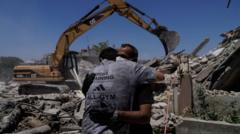
Less than a day after a ceasefire agreement was announced between Israel and Hezbollah, Israeli airstrikes in southern Lebanon have reportedly claimed the lives of nearly two dozen people. Officials reported 16 fatalities in the Nabatieh district and seven in Saida, following an offensive involving Israeli drones, warplanes, and artillery.
The Israeli military stated its actions were in response to Hezbollah firing over 50 projectiles into Israel. Conversely, a Hezbollah spokesperson told the BBC that the group does not acknowledge the US-brokered ceasefire, asserting its right to retaliate against Israeli incursions. Senior figure Hassan Fadlallah emphasized that Hezbollah expects a full cessation of Israeli aggression against Lebanese territory.
Washington has voiced concern that these ongoing exchanges threaten the broader peace deal recently signed with Iran. US envoy Steve Witkoff is reportedly traveling to Switzerland to hold discussions with Iranian representatives to secure the pact. Despite these diplomatic efforts, deep-rooted issues—including the presence of Israeli troops in southern Lebanon and the status of Hezbollah’s arsenal—remain unresolved.
Conditions on the ground are dire. Emergency responders like Ali, a Red Cross worker in Nabatieh, described the situation as increasingly grim, with medical facilities overwhelmed and morgues reaching capacity. While some residents had initially returned home following earlier truces, the persistent violence has led to widespread displacement and the destruction of numerous southern communities.
Prime Minister Benjamin Netanyahu continues to face significant domestic pressure to maintain military operations against Hezbollah. Meanwhile, the conflict persists with both sides accusing each other of violating earlier agreements, illustrating the fragile nature of the current diplomatic efforts to achieve lasting stability in the region.