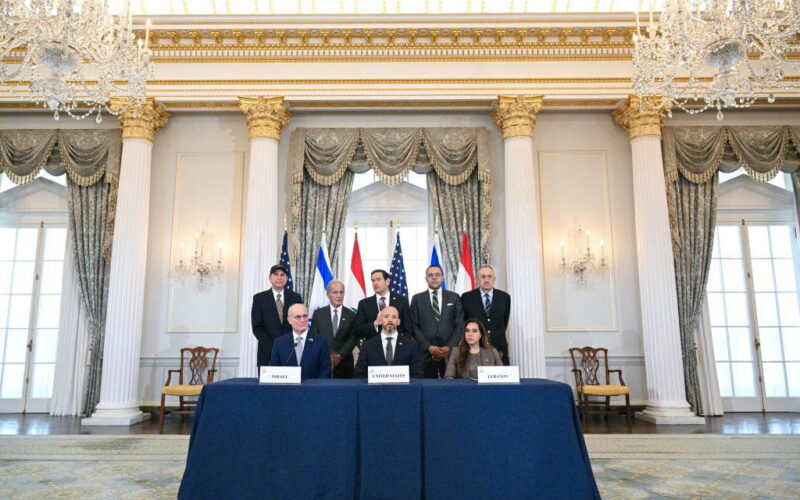
On June 26, 2026, representatives from the United States, Israel, and Lebanon gathered at the State Department in Washington, D.C., to ink a trilateral agreement intended to set the stage for long-term peace. US Secretary of State Marco Rubio oversaw the ceremony, which was attended by Israeli Ambassador Yechiel Leiter and Lebanese Ambassador Nada Hamadeh Moawad.
This framework is the outcome of five rounds of negotiations held in Washington. It outlines a strategy to disarm Hezbollah and mandates that the Lebanese Armed Forces reclaim sovereign control over their territory. As part of a pilot program, Lebanese troops will move into two designated zones—one north and one south of the Litani River—currently held by Israeli forces. Provided the disarmament of non-state groups occurs, Israel has committed to a phased withdrawal of its military.
Secretary Rubio described the deal as an initial step toward regional stability, while acknowledging that significant challenges persist. Both nations expressed divergent views on implementation; Hezbollah leader Naim Qassem continues to demand an unconditional Israeli retreat, whereas Israeli Prime Minister Benjamin Netanyahu insists on maintaining a presence until Hezbollah surrenders its weaponry.
To support this transition, the United States has pledged $100 million in humanitarian aid through the United Nations and an additional $30 million to bolster the operational capacity of the Lebanese military. Despite previous failed truces, officials and international bodies like the UN view this framework as a crucial development for a region where the recent conflict has resulted in over 4,200 deaths and the displacement of more than one million Lebanese civilians.