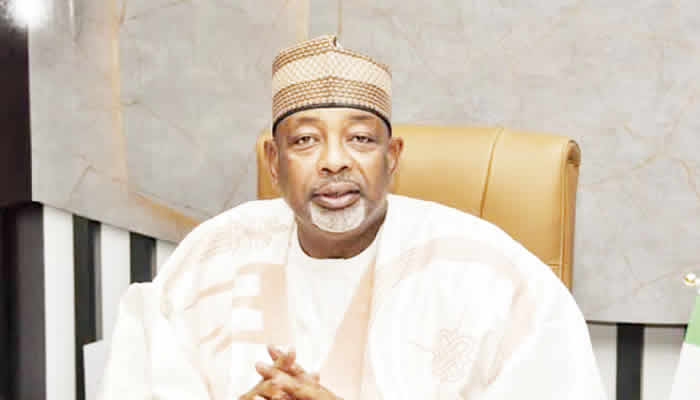
As President Bola Tinubu marks his second year in office on May 29, 2025, Nigeria’s agricultural sector—central to his Renewed Hope Agenda—has witnessed notable progress alongside persistent challenges under the stewardship of Minister Abubakar Kyari.
The Federal Ministry of Agriculture and Food Security was established to spearhead economic diversification, reduce Nigeria’s dependence on oil revenues, and achieve food self-sufficiency. Its core mandates include boosting agricultural productivity, ensuring food security, generating employment, and promoting rural development.
While the ministry has made commendable advances during this administration, the sector continues to grapple with significant obstacles that threaten food security and economic stability.
Food inflation remains alarmingly high, with prices rising over 40 per cent year-on-year for nearly a decade, leaving many Nigerians struggling to afford basic staples. This surge is fueled not only by market forces but also by complex factors including insecurity, inadequate infrastructure, and administrative inefficiencies.
Insecurity—marked by banditry, kidnappings, and communal conflicts—has rendered vast farming areas inaccessible, disrupting production cycles and deterring investments. Moreover, the rampant smuggling of food items across borders drains local supplies and distorts market dynamics.
Infrastructure deficiencies deepen the crisis. Poor rural road networks and inefficient logistics hinder the transportation of farm produce to markets, resulting in large quantities of food never reaching consumers despite successful harvests.
Minister Kyari has openly acknowledged systemic corruption and manipulation within the ministry’s farmers’ database, which severely hampers the effective distribution of government support. Subsidised inputs like seeds, fertilizers, and machinery frequently fail to reach genuine farmers, undermining national food security efforts.
Post-harvest losses present another major hurdle. Estimates suggest up to 40 per cent of Nigeria’s agricultural produce is lost annually due to inadequate storage, lack of preservation technologies, and insufficient transport infrastructure. This translates into significant financial losses and exacerbates food price pressures.
Adding to these challenges is the growing impact of climate change. Flooding, erratic rainfall, droughts, and unpredictable weather patterns have disrupted traditional planting and harvesting seasons, often causing devastating crop failures.
Peter Dama, Chairman of the Competitive African Rice Forum, Nigeria, remarked that while the government has launched several initiatives, their full impact on the agricultural sector is yet to be realized.
“We’ve seen some aspects of achievements in terms of the agricultural sector. They have established the National Agricultural Fund. I think the fund is still working. Trying to see how they can reach out and provide financing to agriculture,” Dama said.
According to Dama, government-backed efforts in mechanisation and input distribution have also been initiated, though not fully implemented.
He said, “We have also seen the tractorisation. Where they had said they were bringing in thousands of tractors that would be distributed to farmers. We have heard of it. If it happens, that’s an achievement.
“Then, during the beginning of the season, we heard about fertiliser reaching the States for agriculture. We believe that will be distributed to a number of farmers.”
Dama also pointed to the ongoing work around Special Agro-Industrial Processing Zones, which are expected to enhance value-chain development if fully executed.
“Then, during this time, although the agri-processing zones have been on, the issue had been on, but I’ve heard that they are going to take it forward. They are not abandoning that. So, we believe that with the agri-processing zone, if it is taken on board and implemented, then states with specialised agricultural production would be able to work because special attention will be given to those sectors. Now, this is how far I may commend,” he added.
He further noted government interest in improving seed quality and nutrition, especially through rice fortification. He has gained support from development partners.
He noted, “He has also spoken about seeds because seeds are part of an area where it has been a challenge to our country. His government is also talking about increasing the nutritional value of food for people in the country. They have approved that rice should be used as a vehicle to reach out to people.
“There has been a lot of capacity building going around in the country by development partners, talking about rice fortification. That, again, is something that we are looking forward to. I believe that if done, it will be a good thing for us.”
Dama did not shy away from highlighting the deeply rooted problems plaguing the agricultural sector, particularly insecurity. While he acknowledged efforts to tackle the issue, he said there is more that needs to be done.