

Dangote Refinery To End Crude Importation By December 2025

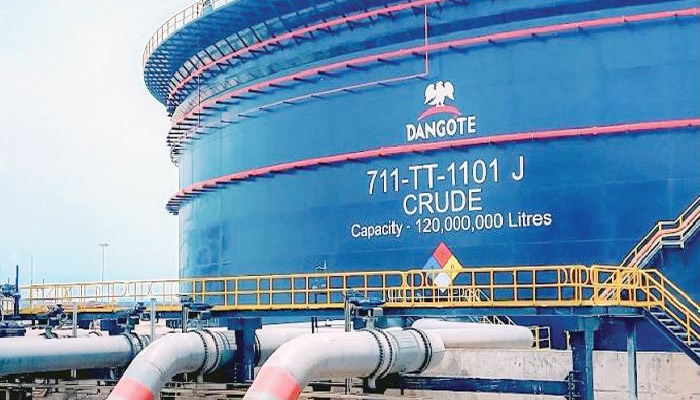
Aliko Dangote, Africa’s richest man and founder of the refinery, has long emphasized the need for Nigeria to refine its own crude rather than exporting it for processing and re-importing it at premium costs.
The Dangote Oil Refinery is set to stop crude oil imports by the end of December 2025, transitioning fully to sourcing feedstock from domestic Nigerian producers, according to a report by Bloomberg.
The $20 billion facility, which has a nameplate capacity of 650,000 barrels per day, is gradually shifting away from reliance on foreign oil. In June, nearly 53 percent of the crude refined at the plant was sourced locally, while 47 percent came from the United States.
Devakumar Edwin, Vice President at Dangote Industries Ltd., said the facility aims to depend entirely on Nigerian crude by the end of the year. Speaking to Bloomberg, he explained that the refinery’s long-term foreign crude supply contracts are due to expire soon, making way for a full transition to domestic sources.
“We expect some of the long-term contracts will expire. Personally, and as a company, we expect that before the end of the year, we can transition 100 percent to local crude,” Edwin said.
While the refinery has imported crude from countries like Brazil, Angola, Ghana, and Equatorial Guinea, Edwin noted that improved relations between Dangote, local oil traders, and the Nigerian government are paving the way for increased local supply.
Despite the optimism, Nigeria’s Domestic Crude Supply Obligations (DCSO) policy has faced resistance. The Nigerian Upstream Petroleum Regulatory Commission (NUPRC) reported that some oil producers have protested being mandated to prioritize domestic refineries, including Dangote.
Factors such as pipeline vandalism, crude theft, and production shortfalls have also constrained local supply, creating gaps that were initially filled with foreign oil.
Still, the refinery is expected to receive five cargoes—each nearly one million barrels—from the Nigerian National Petroleum Company Limited (NNPC) in both July and August, according to documents seen by Bloomberg.
Currently processing about 550,000 barrels per day, the refinery is positioned to drastically reduce Nigeria’s dependence on imported fuel and help stabilize the naira, which has been battered by forex pressure from petroleum imports.
The move is also expected to enhance energy security, create local jobs, and reduce refined fuel costs over time.

You may be interested

Violent Clashes Erupt During Lahore High Court Bar Elections
gisthub - Mar 03, 2026A physical confrontation between legal professionals broke out within the Lahore High Court premises in Pakistan during the Bar Association’s electoral proceedings. The…
IAEA Confirms Strike Impact at Natanz Nuclear Complex
gisthub - Mar 03, 2026The International Atomic Energy Agency (IAEA) has verified that recent military strikes by American and Israeli forces caused structural damage to Iran's Natanz…

Flamengo Parts Ways with Filipe Luis Despite Dominant Semi-Final Victory
gisthub - Mar 03, 2026In a surprising move, Brazilian powerhouse Flamengo has dismissed head coach Filipe Luis shortly after a commanding 8-0 win over Madureira in the…
Most from this category

Death Toll Climbs in Iran as New Leadership Defies Foreign Pressure
gisthub - Mar 03, 2026
Sean ‘Diddy’ Combs Set for April 2028 Prison Release
gisthub - Mar 03, 2026
US Embassy in Riyadh Hit by Drones Amid Rising Regional Tensions
gisthub - Mar 03, 2026
Our Picks

Chargers’ Ben Cleveland Reaches Major Divorce Settlement Following DUI Case
gisthub - Mar 03, 2026Death Toll Climbs in Iran as New Leadership Defies Foreign Pressure
gisthub - Mar 03, 2026Sean ‘Diddy’ Combs Set for April 2028 Prison Release
gisthub - Mar 03, 2026
Most Popular





Leave a Comment