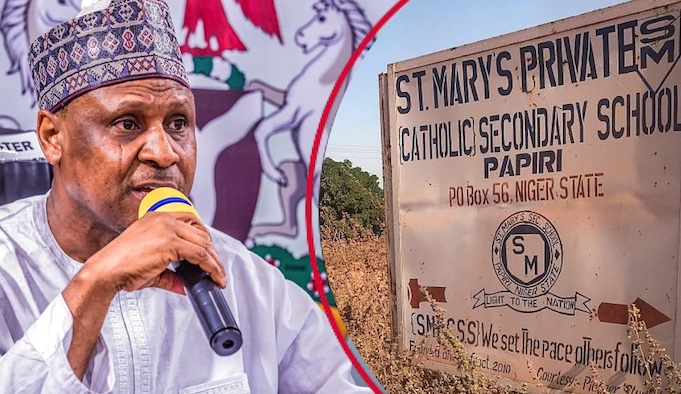
The Federal Government of Nigeria has officially dismissed reports alleging it paid a N2 billion ransom to secure the release of students kidnapped from St. Mary’s School in Niger State.
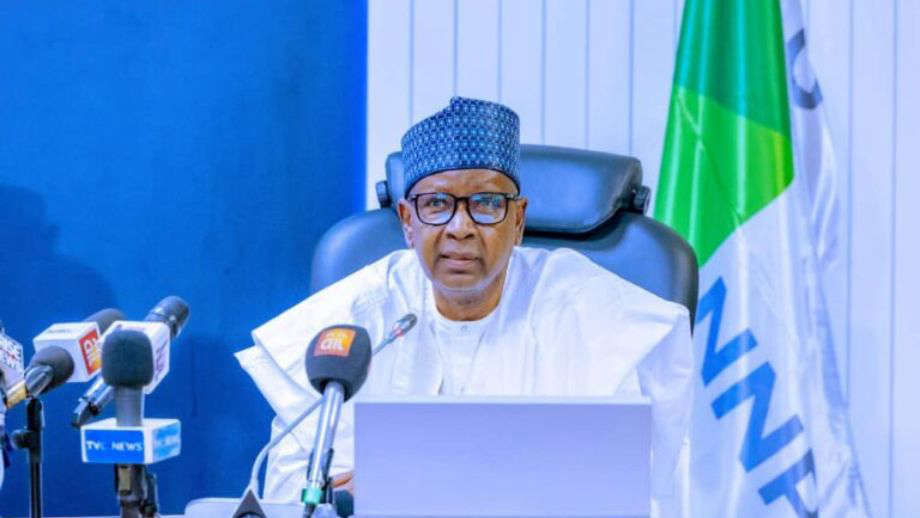
Minister of Information Mohammed Idris characterized the claims—originally reported by Agence France-Presse (AFP)—as “false and baseless,” maintaining that the rescue was the result of coordinated security intelligence rather than financial concessions or the release of militant commanders.
The controversy stems from an AFP report citing anonymous sources who claimed that millions of dollars and the swap of two insurgent leaders facilitated the freedom of roughly 230 pupils and staff.
The government, supported by the Department of State Services (DSS), labeled these details as “fiction.” However, opposition parties, including the PDP and ADC, have called for greater transparency, arguing that any secret negotiations would only further embolden criminal enterprises.
This incident has gained international traction, with members of the U.S. Congress reportedly briefing President Donald Trump on the persistent targeting of Christian communities in Nigeria.
Despite a 2022 law that criminalizes ransom payments with up to 15 years in prison, the country continues to grapple with a “profit-driven” kidnapping crisis. Analysts suggest that factions of Boko Haram have increasingly pivoted to mass abductions as a primary revenue stream amidst shifting operational landscape.