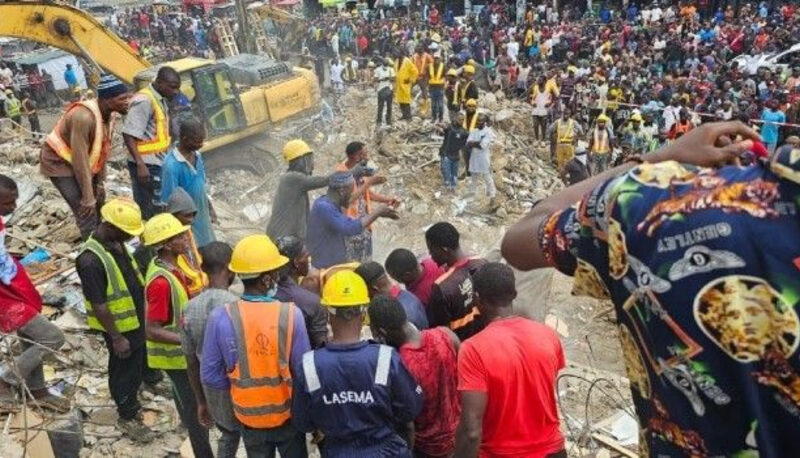
A tragic building collapse occurred on Thursday, June 26, in the Alakija area of Lagos State, resulting in the death of nine individuals. The two-story structure, located along Old Ojo Road, crumbled before noon, trapping numerous residents and leaving families in mourning. The Lagos State Emergency Management Agency (LASEMA) successfully rescued 27 people who were transported to medical facilities for urgent care.
Afolabi Olawale, the LASEMA spokesperson, confirmed that the recovery mission involved heavy machinery and inter-agency cooperation. Among the deceased were five children, including a toddler. Following the event, Governor Babajide Sanwo-Olu mandated a strict structural assessment of all nearby buildings to ensure safety compliance. This tragedy unfolded less than a day after a four-story building under construction collapsed in Rivers State, which also triggered a large-scale rescue operation.
Building failures have become a persistent crisis in Nigeria. Experts argue that the root causes include the use of substandard construction materials, the omission of critical soil tests, and systemic corruption within oversight agencies. Structural engineer Kunle Adegbenro pointed out that developers frequently bypass necessary regulatory procedures by bribing town planning officials to ignore defective foundations and design deviations.
Furthermore, analysts like Chudi Ubosi emphasize that many property owners exacerbate the issue by hiring unqualified builders to minimize costs. While the Lagos State government has enacted legislation to seize property involved in such disasters, critics maintain that without professional oversight in monitoring teams and a crackdown on systemic bribery, the cycle of collapses will likely continue. Industry professionals urge the public to prioritize hiring certified experts, noting that the cost of professional services is a necessary investment to prevent further loss of life.