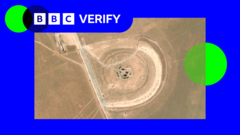
As additional regions in England prepare to join Wales in an official drought designation, BBC Verify has analyzed satellite imagery illustrating the consequences of this summer’s extreme temperatures. The persistent heatwaves have dramatically altered the appearance of the British landscape, affecting everything from historic landmarks and expansive parks to vital reservoirs and golf courses.
Government data indicates that nearly all reservoirs across England and Wales are experiencing below-average water levels. Notably, five reservoirs are categorized as exceptionally low, including the Clywedog reservoir in Powys, which supplies the West Midlands. Satellite comparisons between August of this year and last reveal significantly more exposed banks. Despite these levels, the primary driver for recent drought declarations and hosepipe bans remains the lack of rainfall.
The Environment Agency notes that current reservoir storage in England sits at 69%, falling below the typical 82% benchmark for this period, though it remains higher than levels documented in 2022. Scotland has also felt the impact, with the Scottish Environment Protection Agency warning of significant water scarcity in the Borders due to below-average rainfall.
The intense heat has transformed the visual character of the UK. Hyde Park, a staple of London, has largely turned brown, and the Serpentine lake was forced to close due to blue-green algae blooms, a phenomenon also observed at Killington Reservoir. Similarly, the lush fields surrounding Stonehenge have lost their color, mirroring the widespread vegetation stress observed nationwide. While experts suggest that much of this vegetation will recover upon the return of rain, they warn that the agricultural sector could face future challenges, including rising food costs. Furthermore, the hardened, parched soil increases the risk of flash flooding, as it becomes less capable of absorbing sudden downpours.