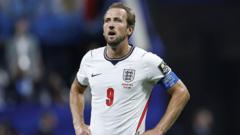
Harry Kane, England’s captain and all-time record goalscorer, is facing questions about his international future following a heartbreaking semi-final exit against Argentina in the latest World Cup. Having scored 85 goals in 124 matches, Kane has been the focal point of the team since 2017. As he nears his 33rd birthday and looks toward the 2030 tournament, when he would be nearly 37, the necessity for a long-term transition becomes clear.
During the recent tournament in North America, manager Thomas Tuchel relied heavily on Kane, providing limited minutes to backup options like Ollie Watkins and Ivan Toney. This hesitation suggests a lack of confidence in alternative attacking setups. With many current English forwards entering their thirties and few young, pure strikers breaking into top-tier form, the talent pipeline appears shallow. Prospects such as Liam Delap have struggled to secure consistent minutes at Chelsea, while academy stars like Charlie McNeill and Eddie Nketiah have yet to replicate their youth success at the senior level.
As the system increasingly produces technical midfielders rather than traditional strikers, England may need to reconsider its tactical approach. If a natural successor does not emerge, adopting a false nine role could become essential. While previous experiments with Phil Foden were unsuccessful, Anthony Gordon has shown promise in this position, most notably leading the team to a European Under-21 Championship victory. Whether through the development of emerging youth talents like Shim Mheuka or a fundamental change in tactical philosophy, England must evolve to sustain its offensive threat in the post-Kane era.