



The Lagos State government has initiated plans to collaborate with neighboring South-West states to foster a regional development model. This strategy is designed to alleviate population density in Lagos while proactively addressing climate change, urban expansion, and environmental degradation.
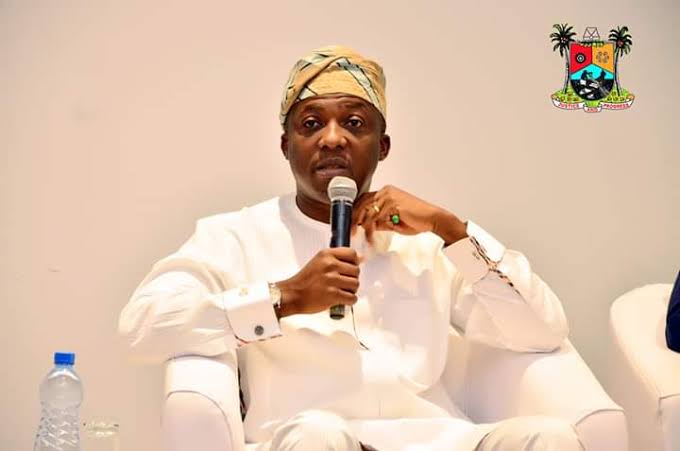
Tokunbo Wahab, Commissioner for the Environment and Water Resources, and Dr. Oluyinka Olumide, Commissioner for Physical Planning and Urban Development, highlighted these efforts during the Policy Dialogue on Climate Adaptation in the Gulf of Guinea. Held in Alausa, the event focused on the necessity of transitioning from discussion to tangible climate resilience.
Wahab noted that Lagos is already executing the Climate Adaptation and Resilience Plan introduced at COP28. He underscored the urgency of protecting coastal ecosystems, warning that illegal wetland development and the destruction of mangroves exacerbate flood risks. The government has begun removing unauthorized structures from drainage paths to preserve natural flood defenses.
To address the unsustainable population influx, Dr. Olumide revealed that Lagos is leveraging the South-West Development Commission to synchronize regional growth. By viewing the South-West as a single zone, the state aims to distribute economic activity more evenly, reducing the burden on Lagos. The government is also encouraging vertical housing construction to conserve land and respect sensitive ecological zones.
Professor Emmanuel Akyeampong of Harvard University’s Salata Institute cautioned that Lagos requires science-led interventions to combat land subsidence and sea-level rise. Experts emphasized that effective adaptation depends on integrating engineering solutions with nature-based protections and ensuring active community involvement in environmental conservation.