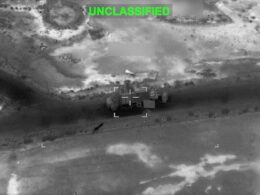
Yemen’s Houthi rebels have initiated a maritime blockade against Saudi Arabia, escalating regional tensions while threatening the kingdom’s capacity to transport oil outside the Strait of Hormuz. The Iran-aligned movement declared the move as a retaliatory measure, though the specific methods for enforcing the embargo remain unclear.
This declaration coincides with Iran’s recent assertion that it is engaged in a full-scale conflict with the United States. Following years of relative calm, the Houthis and Saudi Arabia recently exchanged fire, jeopardizing a 2022 ceasefire. The renewed friction was sparked when an Iranian aircraft attempted to land in Sanaa, challenging Saudi control over Yemeni airspace.
Military spokesman Yahya Saree confirmed the action, characterizing it as an immediate response to Saudi-led restrictions on Houthi-controlled ports and airports. If successfully implemented, the blockade could severely disrupt global energy markets, as Saudi Arabia is a major crude producer. Analysts note that blocking the Bab al-Mandab Strait, a vital shipping lane, alongside potential closures at the Strait of Hormuz, would cause significant economic instability by forcing vessels to take much longer routes around Africa.
UN spokesperson Stephane Dujarric expressed concern that the Houthi threats could ignite a broader regional war. Meanwhile, Rashad al-Alimi, leader of the Saudi-backed Yemeni government, announced plans to resume domestic oil exports, though details on how to bypass Houthi obstruction were not provided. The ongoing conflict, which began in 2014, continues to fuel deep instability in the region.