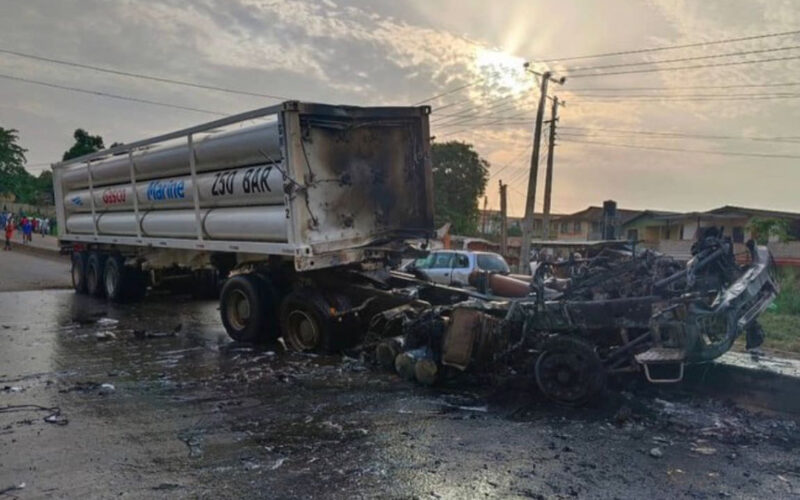
In Ogun State, severe road accidents are a recurring tragedy. As Nigeria’s vital economic corridor, the state’s highways are essential for transit, yet they have increasingly become hazardous zones. According to the Federal Road Safety Corps (FRSC), Ogun recorded 724 crashes in 2024, causing 311 deaths and 1,815 injuries. The following year saw 494 crashes with 212 fatalities in the first half alone, while the initial six months of 2026 recorded 415 accidents, 161 deaths, and 1,007 injuries.
Surprisingly, well-maintained roads often prove more dangerous than those in disrepair. Smooth pavement invites drivers to speed, become distracted, or overtake recklessly. Afolabi Odunsi, the FRSC Ogun Sector Command spokesperson, noted that the Ogunmakin, Ijebu-Ode, Abeokuta–Sagamu, and Ogbere axes are significant danger zones. He emphasized that human behavior—such as speeding, phone use, and consuming food or water while driving—accounts for over 90 percent of all incidents.
Heavy commercial vehicles pose a severe risk, as seen in a tragic accident involving an articulated truck that killed ten people due to illegal maneuvering. Furthermore, stationary trucks on highways remain a major threat. A December 2025 collision involving a Lexus carrying former heavyweight boxing champion Anthony Joshua resulted in the deaths of two of his team members, Sina Ghami and Latif Ayodele, after the vehicle hit a parked truck.
To combat rising fatalities, the FRSC has intensified enforcement, arresting 1,203 drivers and impounding 1,016 vehicles between January and July 2026 through initiatives like ‘Operation Guduma’ and the ‘AABO’ special patrol. To serve as a stronger deterrent, the agency is preparing to increase traffic violation fines by 300 percent, which may include mandatory psychiatric evaluations for offenders. Looking ahead, the command plans to implement an automated system that links traffic fines directly to National Identification Numbers and bank accounts to ensure accountability.