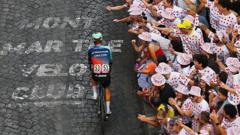
The conclusion of this year’s Tour de France drew a massive crowd, with 180,000 fans gathered at Montmartre to witness the finale. The event was a testament to the sport’s enduring popularity and health, characterized by electric atmosphere and high-stakes drama on the road. Tadej Pogacar, the 27-year-old Slovenian sensation, secured his fifth Tour title, placing him among cycling’s all-time legends like Eddy Merckx and Jacques Anquetil. His performance was particularly impressive given that much of his UAE-Team Emirates-XRG squad, including himself, battled illness during the race.
Amidst the celebration, the International Testing Agency (ITA) conducted intensive, late-night anti-doping tests. While no wrongdoing was found, these measures were described as an exceptional operation aimed at detecting potential micro-dosing. Experts like Jonathan Vaughters suggest that such stringent, round-the-clock testing is essential for maintaining the sport’s integrity and preventing the patterns of doping that marred its history. Despite the scrutiny, the sport continues to see a surge in engagement, with hundreds of thousands of spectators lining iconic climbs like Alpe d’Huez.
As the cycling world looks ahead, anticipation grows for the upcoming stages to be hosted in Britain, where interest in the sport remains high. While riders like Tom Pidcock aim to capture local imagination, fans continue to flock to races, signaling that professional cycling retains a strong, global connection with its audience, even as it strives to move past its turbulent past through rigorous transparency.