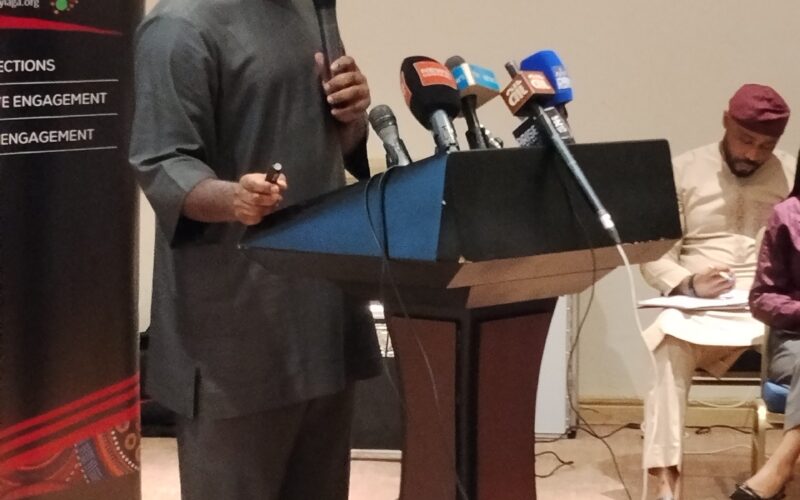
Ahead of the upcoming Osun governorship race and the 2027 general elections, the civil society group Yiaga Africa has called on the Independent National Electoral Commission (INEC) to create a clear protocol for transmitting results. Samson Itodo, the group’s Executive Director, spoke at an Abuja roundtable, stressing that the public deserves a full understanding of how election data moves from the polling station to the final tally.
Yiaga Africa’s policy brief highlights that while the Electoral Act 2026 mandates electronic transmission, critical parts of the process remain hidden. The group noted that results are uploaded in batches rather than real time, often undergoing an opaque internal validation process. Furthermore, the absence of ward and local government collation forms on the IReV portal prevents citizens from verifying the accuracy of the final counts. The group also warned that inconsistencies between physical sheets, scanned images, and electronic records lack a clear legal resolution.
To address these concerns, the organization proposed several administrative reforms that do not require new legislation. These include publishing a detailed transmission protocol, posting all collation forms online, and defining which version of a result sheet takes priority during disputes. They also suggested that INEC conduct public mock exercises, improve staff training manuals, and formally gazette all guidelines. These steps, according to Yiaga Africa, are essential to ensuring electoral integrity and must be implemented before the next election cycle.