




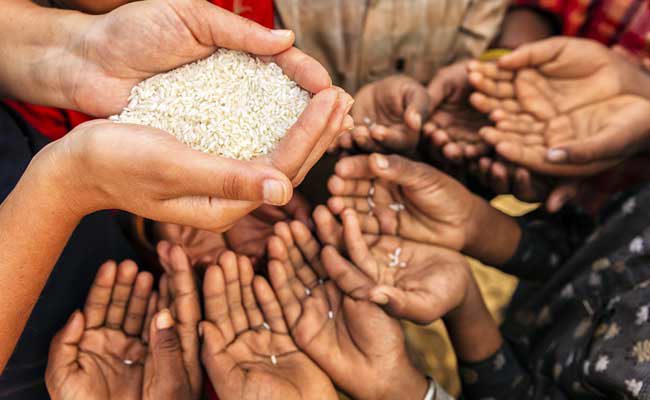
A recent United Nations report indicates that global hunger rates decreased for the third year in a row in 2025. Despite this trend, Africa has become the new focus of the food crisis, now hosting the largest share of undernourished people worldwide.
According to the 2026 State of Food Security and Nutrition in the World report, the global hunger rate fell to 7.8 per cent in 2025 from 8.1 per cent the previous year. Africa now records 309 million hungry individuals, moving past Asia’s 292 million. One in every five Africans faced hunger last year, with over half the population struggling with food insecurity.
While worldwide hunger counts have dropped by 43 million since 2022, the UN cautioned that these improvements are fragile. Achieving the goal of ending hunger by 2030 remains unlikely at the current pace. The assessment, backed by agencies including the FAO, IFAD, UNICEF, WFP, and WHO, notes that approximately 645 million people faced hunger in 2025.
Access to healthy nutrition remains difficult. In 2025, 2.1 billion people faced food insecurity, and nearly 2.7 billion could not afford a healthy diet. In Africa, the rate of unaffordability reaches 66.6 per cent. Furthermore, child and maternal health metrics are struggling, with 150 million children stunted and rising rates of adult obesity.
Officials including FAO Director-General Qu Dongyu and WHO Director-General Dr. Tedros Adhanom Ghebreyesus emphasized that while progress exists, accelerated investment and policy reform are essential. They advocate for better infrastructure, trade improvements, and social protections to combat the combined threats of climate change, conflict, and economic instability.