



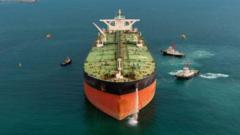
Security experts warn that the risk to oil tankers in the Middle East has reached its most dangerous point since the conflict with Iran began. This escalation follows a series of hostile incidents along a secondary maritime route in the Red Sea, which companies had previously utilized as an alternative to the Strait of Hormuz.
Data from the tracking firm Kpler reveals that traffic through the Strait of Hormuz has plummeted, with daily vessel counts often in the single digits compared to over 100 before the hostilities. Meanwhile, Houthi militants backed by Iran have targeted Saudi Arabian tankers in the Red Sea, further complicating global energy logistics. Matthew Wright of Kpler described the situation as a cumulative crisis, noting that the threat is now compounding existing obstacles for the shipping industry.
Industry groups like Intertanko report that the security landscape is becoming increasingly complex, affecting freedom of navigation across a broader geography. As a result, many vessels have begun disabling their tracking transponders to avoid detection. Shipping executives, including those from Hapag-Lloyd, state that they are monitoring conditions closely and may adjust routes as necessary. Experts suggest that even if the Strait of Hormuz were to reopen immediately, returning to standard cargo volumes would likely take several months due to the significant redeployment of assets.