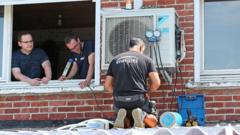
France is re-evaluating its historical skepticism toward air conditioning as the nation experiences record-breaking temperatures. Currently, only about 25% of French households possess cooling systems, a significantly lower figure compared to Japan, the United States, Italy, or Spain.
The debate has intensified as schools shutter and hospitals struggle with extreme heat. Even leaders within the Green movement, such as Marie Tondelier, are beginning to concede that air conditioning has become a necessity in critical public infrastructure like medical facilities and classrooms. This shift moves away from previous ideological stances that viewed cooling systems as obstacles to addressing the root causes of global warming.
Political factions remain deeply divided on the issue. While the populist right, led by Marine Le Pen, advocates for a massive, subsidized rollout of cooling units for homes and public buildings, critics label these proposals as opportunistic. Meanwhile, government urban planning still prioritizes natural insulation and greenery to mitigate heat, often leaving new projects, such as the Nantes hospital, with limited air conditioning capacity. Despite these conflicts, the reality of the climate crisis is driving a consensus that increased use of cooling technology is becoming unavoidable for public health and safety.