



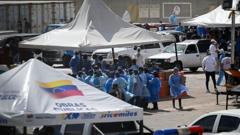
A port storage site in La Guaira has become the grim focal point for families attempting to identify victims of Venezuela’s twin earthquakes. With the death toll now exceeding 2,600, the local infrastructure is completely overwhelmed, leaving authorities to repurpose the Los Silos facility to process a massive influx of remains.
Relatives, having searched through hospital wards and collapsed buildings for days, now wait in the sweltering heat for their turn to search for family members. Inside, the conditions are harrowing. Many bodies are arranged in rows outdoors, exposed to high temperatures, which has necessitated the use of makeshift cooling measures and swift forensic interventions.
Identification efforts rely largely on digital imagery. Two large television screens cycle through a database of more than 1,000 photos, forcing grieving survivors to scan for recognizable tattoos, jewelry, or familiar clothing. This process is deeply traumatic, with witnesses comparing the experience to a nightmarish ordeal.
For those like 60-year-old Liliana González, who identified her nephew by his tattoo, or Jéssica Soto, who spent days waiting for the release of her daughter and granddaughter, the process is agonizing. Despite the presence of forensic specialists using dental records and fingerprinting, the sheer scale of the disaster means many families face long administrative delays before they can finalize the recovery of their loved ones. The site remains under strict military control, while staff attempt to manage the grim reality of a disaster that has left almost nothing of the region’s original infrastructure standing.