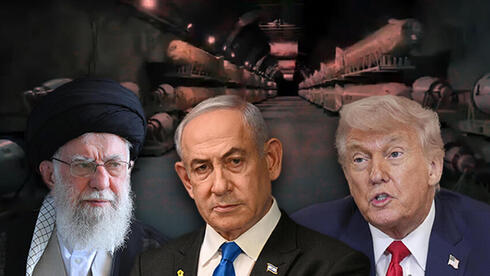
U.S. President Donald Trump has stated that the newly announced cease-fire between Iran and Israel, brokered by his diplomatic team, is more than a short-term halt in fighting—it could be the foundation for lasting peace.
In a phone interview with NBC News on Monday night, Trump said:
“I think the ceasefire is unlimited. It’s going to go forever.”
Trump hailed the development as a significant geopolitical triumph, highlighting its importance for regional stability and reinforcing the role of the United States in global leadership.
“It’s a great day for America. It’s a great day for the Middle East. I’m very happy to have been able to get the job done. A lot of people were dying, and it was only going to get worse. It would have brought the whole Middle East down.”
This historic breakthrough represents the first time in decades that a U.S.-led effort has achieved direct de-escalation between two of the region’s most ideologically and militarily opposed nations. Trump further asserted that the cease-fire could mark the beginning of a lasting end to hostilities.
“I don’t think Israel and Iran will ever be shooting at each other again.”
According to senior administration officials, Trump personally engaged in high-stakes talks with Israeli Prime Minister Benjamin Netanyahu to halt the rapidly escalating conflict.
Simultaneously, a layered diplomatic initiative unfolded behind the scenes, led by Vice President J.D. Vance, Secretary of State Marco Rubio, and special envoy Steve Witkoff. The team coordinated with Iranian intermediaries through a mix of direct talks and discreet backchannel efforts.
The agreement reportedly requires both Iran and Israel to begin a complete halt to military actions — including airstrikes, cyberattacks, and covert operations — by midnight ET on Tuesday.
Trump announced the breakthrough on Truth Social, crediting the outcome to “American strength and smart diplomacy.” He also suggested the deal could mark a turning point in the legacy of U.S. foreign policy in the Middle East.
The cease-fire follows a volatile series of exchanges between Israel and Iran, involving drone attacks, cyber warfare, and suspected sabotage. Analysts had warned that without swift diplomatic intervention, the conflict risked spiraling into a broader regional war — potentially involving Hezbollah, Syria, the Gulf States, and U.S. military assets in the area.
Trump’s intervention thus signifies more than a cease-fire — it marks a high-stakes diplomatic gamble that appears to have succeeded, at least for now. Still, experts warn that enduring peace will require more than a temporary halt in hostilities. Deep-rooted structural reforms, sustained trust-building efforts, and reliable third-party verification mechanisms are essential to ensure long-term stability.
Whether this agreement truly “goes forever,” as Trump claimed, is uncertain. The entrenched geopolitical, ideological, and security rivalries that have shaped Iran-Israel relations for over forty years are unlikely to be resolved by a single, albeit historic, accord.