



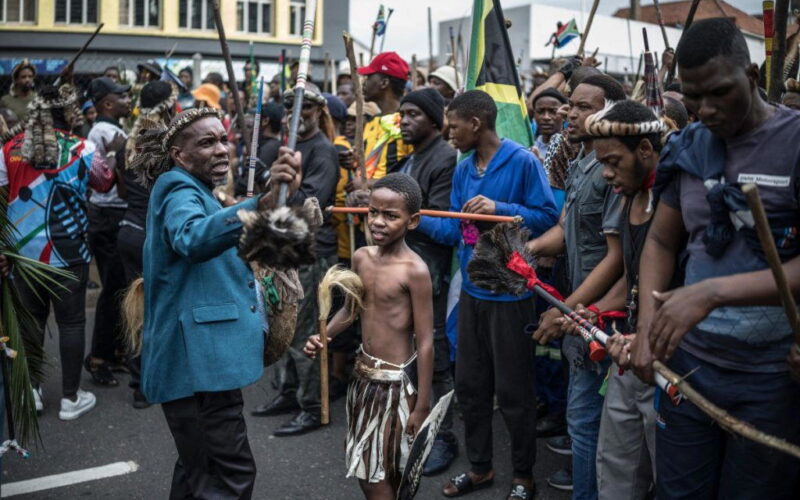
On June 30, 2026, massive demonstrations took place across South Africa, as citizen-led groups enforced an unofficial deadline for undocumented foreign nationals to vacate the country. The protests, organized by various minor political parties and vigilante groups, resulted in significant unrest and prompted thousands of migrants to flee.
Security forces were heavily deployed across major cities including Johannesburg and Durban to manage the volatility, which has already led to the deaths of four people, including nationals from Mozambique, Ethiopia, and Malawi. While many areas remained quiet due to business closures, incidents of looting and confrontation occurred, requiring police intervention to protect foreign individuals from hostile mobs.
Anti-immigrant groups claim that illegal migration exacerbates high unemployment, which currently exceeds 30 percent, and strains public services. Jacinta Ngobese-Zuma, a prominent leader of the March and March movement, publicly called for mass deportations. Conversely, experts suggest that such groups are scapegoating foreigners for broader systemic failures and government inefficiencies.
The impact of this atmosphere has been severe, with many migrants reporting evictions and job losses out of fear. In response, several African nations, such as Nigeria and Zimbabwe, have initiated organized repatriation efforts. Authorities report that over 25,000 individuals have already sought assistance to return to their home countries. President Cyril Ramaphosa has urged calm while announcing new measures to address illegal immigration, although analysts warn the issue is being politically exploited ahead of upcoming local elections.