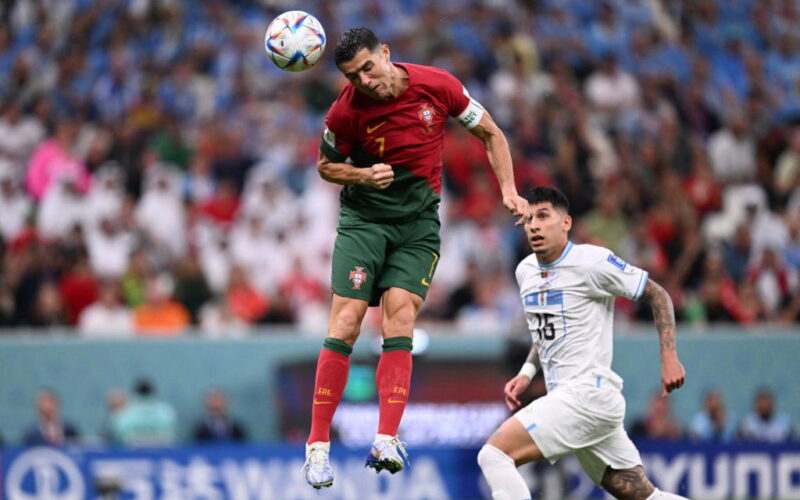
Cristiano Ronaldo’s career represents far more than just sporting success; it serves as a long-term experiment against the idea that one’s life is defined by their starting circumstances. Over twenty-three years, he transformed self-improvement from a private habit into a public display, proving that greatness is a deliberate structure built through repeated, disciplined actions rather than simple luck.
Born in Madeira, a place defined by economic hardship, Ronaldo faced significant obstacles early on, including a childhood marked by scarcity and a heart condition that threatened his teenage career. Rather than succumbing to these limitations, he developed an intense relationship with effort. While peers viewed training as a requirement, Ronaldo viewed it as a pathway to refinement. This approach followed him to Manchester United and Real Madrid, where he evolved from a flashy winger into a clinical, precise forward who mastered every aspect of his physical and mental game.
His rivalry with Lionel Messi highlighted two distinct visions of excellence: Messi’s natural, instinctive brilliance and Ronaldo’s relentless, calculated pursuit of growth. Ronaldo’s time at Real Madrid, where he scored 450 goals in 438 matches, solidified his status as an architect of his own potential. Even as age slowed his physical pace, he reinvented his role, shifting his focus to positioning and anticipation.
Ultimately, Ronaldo’s legacy is not found in his trophies or goal records, but in his demonstration that identity is not a fixed state. By treating himself as an ongoing project, he inspired millions to believe that persistence possesses its own creative power. He leaves behind an example for any individual who seeks to improve their circumstances, showing that while we do not choose our starting foundation, we have significant power over what we build upon it.