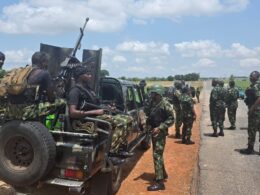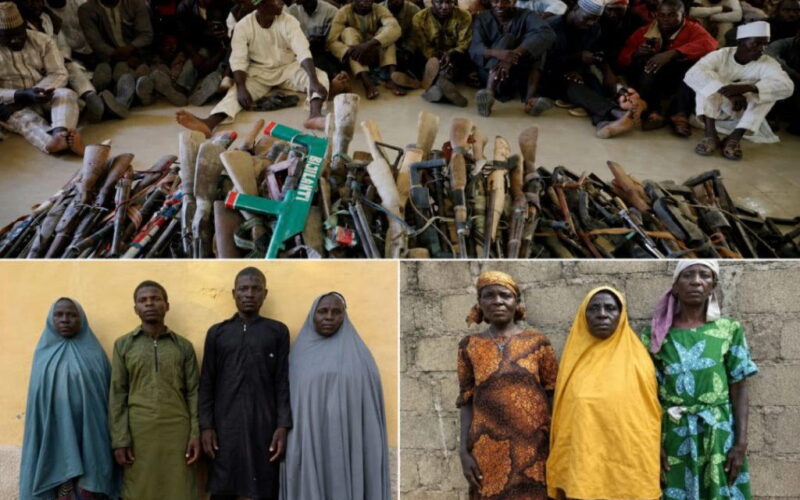
Soldiers in Nigeria’s North-East remain cautious even when seeing figures emerge from the bush. Years of deception, where surrenders served as traps for ambushes, have forced troops to maintain constant vigilance. When individuals eventually exit the dense vegetation—often families or weathered fighters—it signifies a quiet victory in a brutal conflict.
Recently, President Bola Tinubu noted that over 124,000 Boko Haram and ISWAP members, along with their families, have surrendered through Operation Safe Corridor since 2023. This mass exodus is not born of a sudden change of heart, but rather the result of relentless military pressure. Air strikes, targeted ground operations, and the disruption of supply chains have left these insurgents with few options other than death or surrender.
However, these numbers overshadow the immense cost borne by the Nigerian military. Every defector represents a success made possible by soldiers who risked or gave their lives navigating dangerous terrain and constant threats. For every insurgent that lays down an AK-47, there is a grieving military family left behind.
General Christopher Musa, the Minister of Defence, has worked to address public outrage regarding the reintegration of these individuals. He clarifies that those leaving the camps are not a monolith. They are divided into three groups: those forcibly conscripted, non-combatants exploited for menial labor, and hardened militants. The military asserts that these individuals undergo rigorous screening; while the victims and non-combatants may be rehabilitated, the core fighters are targeted for prosecution.
The debate over whether these individuals should be forgiven remains intense. While experts argue that providing a pathway for defection is essential to ending the insurgency, the pain of the affected communities persists. The challenge remains for the government to prove that justice and security can be maintained while navigating the complexities of ending a long-term conflict.