Sri Lanka is currently addressing its most significant dengue epidemic in nearly a decade. To combat the spread, the government has utilized military drones to identify stagnant water on roofs and other locations where mosquitoes thrive. This year alone, the virus has resulted in 56 deaths and over 77,000 infections across the nation.
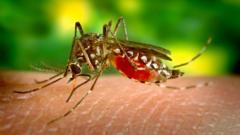
Dengue is a viral infection transmitted by Aedes mosquitoes, which are most active during daylight hours. While many individuals remain asymptomatic, others suffer from severe fever, muscle pain, and nausea. In dangerous cases, the disease can cause internal bleeding or prove fatal. Experts note that because there are four distinct strains of the virus, recovering from one does not grant immunity against the others, and repeat infections can often be more severe.
Health officials link this year’s surge to a cyclone that occurred last December, which left debris across the island that has since become a breeding ground for mosquitoes. In response, authorities have cleared nearly 11,000 breeding sites and issued fines to over 4,000 property owners. Meanwhile, hospitals have extended shifts and added beds to manage the high volume of patients, particularly in urban centers like Colombo.
While global warming is allowing these mosquitoes to expand into new territories such as Europe, the World Health Organization warns that global cases have escalated from 500,000 in 2000 to over 14 million by 2024. As there is no universal vaccine, current prevention strategies focus on eliminating stagnant water and, in some international contexts, using Wolbachia bacteria to reduce the transmission capacity of mosquito populations.