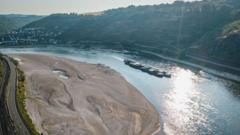
Ongoing heatwaves have pushed the Rhine River to the lowest levels ever recorded at various points in Germany and the Netherlands. Recent data from Cologne and Lobith confirm these levels are unprecedented since record-keeping began. Other vital European waterways, such as the Danube and Italy’s Po River, are facing similar challenges, impacting critical industrial, agricultural, and transportation sectors.
The EU’s Drought Observatories report that drought conditions remain critical, particularly in central-western Europe. As temperatures are expected to climb above 40C across the continent, the strain on water infrastructure is intensifying. In Germany, significant portions of the Rhine and Danube measuring stations recorded extremely low water levels at the end of July. The Kaub chokepoint, a key metric for cargo shipping capacity, reached a historic 25cm low, forcing operators to consider lighter loads and alternative logistics, which may drive up costs and cause supply chain bottlenecks.
Energy production is also suffering. Hungary was forced to shutter its sole nuclear power plant due to low Danube levels, while Serbia and Romania face power supply disruptions as coal-fired plants struggle with cooling limitations. In Italy, the Po River has reached historic lows, triggering high-level drought alerts and threatening drinking water and irrigation systems as saltwater pushes further inland.
While the World Weather Attribution group suggests no definitive long-term downward trend in rainfall, experts note that human-caused climate change is accelerating evaporation through extreme heat, exacerbating these drought conditions. The resulting dry spell continues to increase water demand across all sectors, complicating efforts to manage freshwater resources.