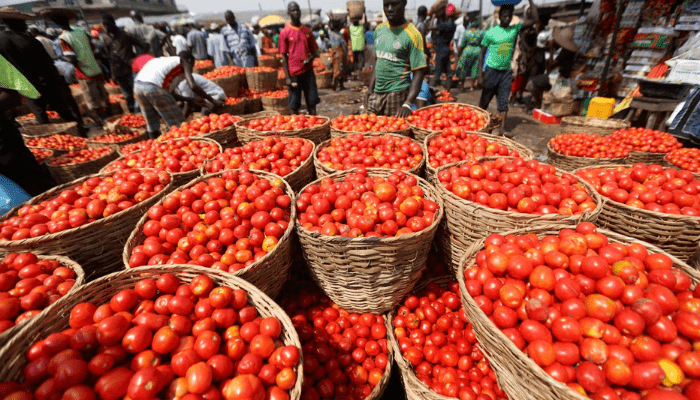
Alexander Isong, the President of the Organisation for Technology Advancement of Cold Chain in West Africa (OTACCWA), has warned that Nigeria is on the brink of significant shortages regarding rice, tomatoes, and other essential food items within the next three months. Speaking to the News Agency of Nigeria, Isong highlighted that declining production levels and reduced farmland are likely to exacerbate existing food inflation and place further financial strain on families.
Data points to a projected six per cent decline in rice production, dropping to 8.3 million tonnes, alongside a seven per cent decrease in cultivated land. The United States Department of Agriculture has also confirmed a five per cent year-on-year reduction. Similar supply concerns extend to maize, sorghum, and millet due to diminished planting efforts in 2025.
Rising logistics expenses are a major factor, with transport costs for grain from Kano to Lagos surging from N45,000 to N70,000 per tonne. Furthermore, ongoing security issues in northern agricultural zones continue to displace farmers, preventing safe access to land and hindering productivity. Inadequate storage facilities also contribute to the crisis, as Nigeria reportedly loses between 30 and 50 per cent of its perishable goods annually.
To mitigate these risks, Isong is calling for a collaborative approach involving federal and state governments, the private sector, and international partners. Proposed solutions include bolstering security in farming regions, enhancing rural infrastructure to lower transport costs, and increasing investment in cold chain storage and processing facilities. He emphasized that by securing agricultural communities and minimizing post-harvest waste, the country can stabilize food supplies and ease price pressures for consumers.