As Nigeria approaches new national minimum wage talks and the 2027 general elections, the Nigeria Labour Congress (NLC) is broadening its scope. The union aims to establish itself as a primary political and social influence capable of steering national governance rather than just focusing on employee compensation.
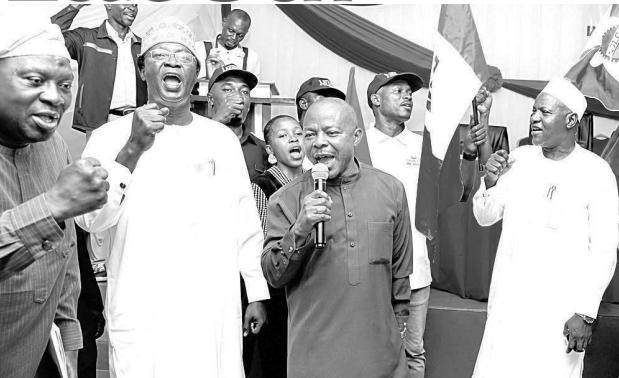
During the 2026 Rain School in Uyo, Akwa Ibom State, NLC President Joe Ajaero outlined a new ideological path. He urged union members to prepare for significant conflicts regarding living wages, legislative protections, and political accountability. Ajaero emphasized that workers should no longer act as mere bystanders or simple voting blocs, but rather emerge as a decisive force for national reform.
The NLC leader rejected the current N70,000 minimum wage as insufficient, describing it as a poverty-level payment that fails to account for current inflation and high living costs. He instructed labour leaders to abandon a submissive approach in negotiations, demanding instead that future wages allow families to live with basic dignity. Furthermore, he criticized the government for stalling essential labour law reforms for six years, calling the delay a calculated effort to preserve exploitative conditions.
Ajaero also highlighted that systemic corruption remains the primary obstacle to prosperity, noting that the nation possesses sufficient wealth that is currently being diverted by the political class. He concluded by challenging union members to transform their solidarity into tangible political action, warning that the fight for a better future requires active participation and persistent unity.