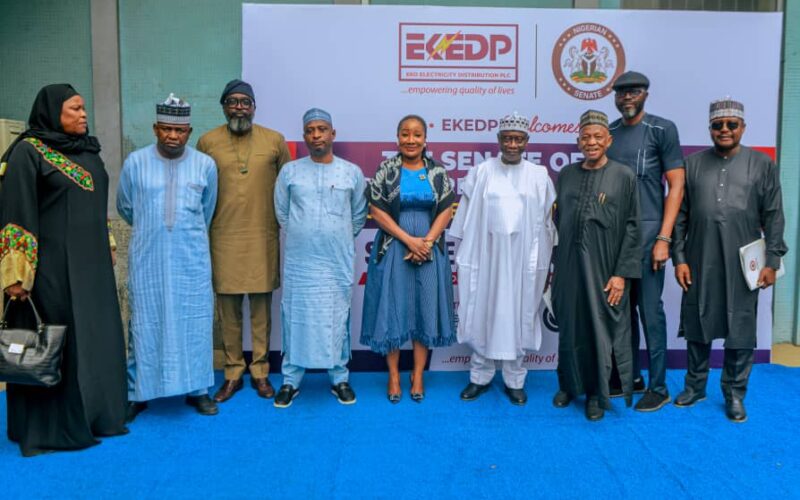
The Senate Committee on Privatisation has praised Eko Electricity Distribution Plc (EKEDP) for its operational gains following the privatization of the Nigerian power sector. During a recent oversight visit at the company headquarters in Marina, Lagos, the committee pledged to address persistent issues, including government debt and transmission limitations, with the Minister of Power.
Senator Shuaibu Isa Lau, who leads the committee, noted significant advancements since the group’s 2024 visit. He specifically highlighted that the committee would intervene regarding unpaid debts from the armed forces and various Ministries, Departments, and Agencies (MDAs), as well as ongoing metering difficulties.
EKEDP reported a substantial shift in its business performance since 2013. According to Abiola Aloba, the company’s General Manager of Corporate Communications, Aggregate Technical, Commercial and Collection (ATC&C) losses decreased from 35.37 percent in 2013 to 19.71 percent by mid-2026. Monthly revenue billing also saw a massive surge, climbing from under ₦2 billion to ₦39.5 billion. Furthermore, the firm has increased its metered customer base from roughly 184,000 to over 584,000.
Managing Director Wola Joseph Condotti confirmed that the company has met its full financial obligations to major industry entities, including the Nigerian Bulk Electricity Trading Plc (NBET) and the Nigerian Independent System Operator (NISO). Recent infrastructure upgrades between 2024 and 2026 added 178.25 megawatts of capacity through new injection substations and network improvements. The company also integrated digital systems like the Eko Power App and NIMC verification to streamline customer services.
However, EKEDP emphasized that external factors still hamper growth. Transmission bottlenecks at key stations such as Ajah, Lekki, and Ojo continue to restrict power supply. Additionally, unstable gas supply to generation companies and unpaid government debts remain significant obstacles to liquidity and efficiency. Despite these hurdles, EKEDP intends to maintain its collaboration with the National Assembly and the Nigerian Electricity Regulatory Commission to ensure long-term stability and increased capacity.