




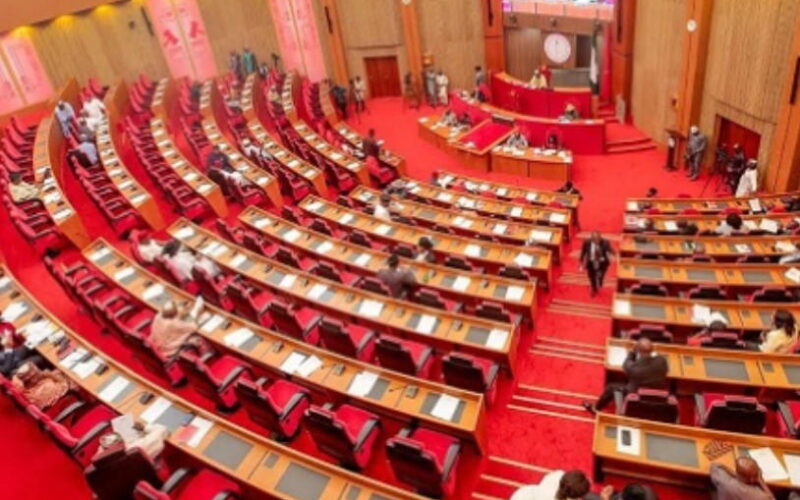
The Senate has widened the investigative scope of its Ad hoc Committee on the Safe Schools Initiative (SSI) and granted the panel a three-week extension to finish its work. This broader inquiry now encompasses the Tertiary Education Trust Fund (TETFund), the Nigerian Education Loan Fund (NELFUND), the Universal Basic Education Commission (UBEC), the Federal Ministry of Humanitarian Affairs and Poverty Alleviation, and the National Social Investment Programme Agency (NSIPA).
Senator Orji Uzor Kalu, who chairs the committee, introduced the motion on Tuesday. He argued that the current oversight would be incomplete without evaluating how these agencies coordinate with the Safe Schools Initiative, as their mandates regarding student welfare and infrastructure funding are closely linked. Kalu noted that a comprehensive review is necessary to ensure accountability and effectiveness across these interconnected programs.
The updated terms of reference require the committee to assess financial flows, operational hurdles, and accountability standards across all named bodies. Furthermore, the inquiry will scrutinize school feeding programs, emergency support for displaced students, and the disbursement processes of NELFUND. The committee also plans to evaluate infrastructure projects supported by TETFund and basic education interventions led by UBEC.
Due to the complexity of these tasks and existing legislative demands, the committee requested more time to finalize its findings, specifically mentioning that several critical site visits remain pending. The Senate granted this three-week extension via a voice vote. Established in December 2025, the committee aims to assess the impact of the Safe Schools Initiative, which was originally launched in 2014 to safeguard educational institutions from conflict-related threats.