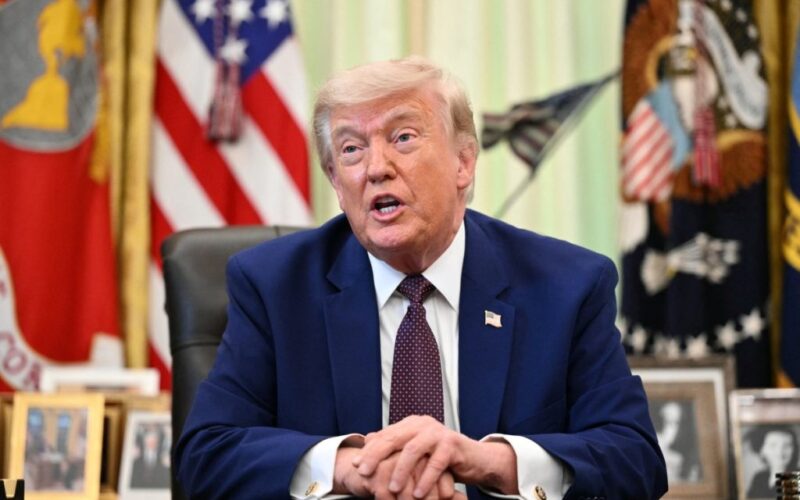
President Donald Trump stated on Wednesday that the United States is prepared to strike Iran forcefully, though he emphasized that he expects any military engagement to conclude rapidly and remains open to future diplomatic discussions. This declaration comes despite his earlier remark that the recent ceasefire had effectively ended.
The hostilities escalated after Iranian forces targeted commercial vessels within the Strait of Hormuz, a critical maritime passage. Tensions have remained elevated since the late February deaths of Iranian leader Ali Khamenei during US-Israeli operations. Tehran continues to assert control over the strait, threatening to impose transit fees and attacking ships that stray from mandated paths.
In response to the targeting of at least three ships, US forces conducted extensive strikes on over 80 Iranian targets, including radar sites, air-defense systems, and naval vessels. Iran retaliated by launching drones and missiles at US military facilities in Bahrain and Kuwait. While US officials confirmed the strikes, Tehran reported eight military fatalities among its ranks.
Despite the intensifying rhetoric and subsequent market reaction—which saw oil prices surge by eight percent—Trump noted that the situation would not involve a long-term conflict. Global leaders, including UN Secretary-General Antonio Guterres, have urged all parties to show restraint. Meanwhile, mediators from Qatar and Pakistan are working to encourage a return to diplomatic channels.
Analysts suggest that both Washington and Tehran are using military pressure to influence the interpretation of their existing memorandum of understanding, which left several maritime transit issues unresolved. As approximately 6,000 seafarers remain stranded in the region, the international community continues to monitor the volatile situation closely.