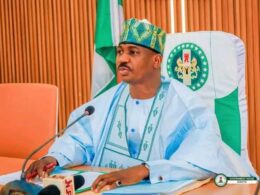
On June 9, 2026, Vice-President Kashim Shettima, representing President Bola Ahmed Tinubu, officially inaugurated the Ado-Ekiti Flyover Bridge. This 1.2-kilometer infrastructure project is a key component of Governor Biodun Oyebanji’s “legacy projects.” In the context of Nigerian governance, these initiatives are capital-intensive efforts designed to drive long-term economic transformation and ensure an impact that outlasts the administration that created them.
This approach aligns with the principle of building for the future, ensuring that progress serves generations beyond the current tenure. Governor Oyebanji has prioritized policies that transition Ekiti from a civil service economy into a hub for commerce, technology, and logistics. His “Shared Prosperity” agenda encompasses urban renewal, agricultural connectivity, and significant infrastructural development.
Key projects include the operational Ekiti Cargo Airport, which serves as an agro-allied facility to boost the state’s GDP, and the 17.8-kilometer Ado-Ekiti Ring Road that improves regional mobility. The Tinubu Flyover serves as a commercial catalyst for the Ado-Ekiti Business District, while ongoing road projects—including the Ado-Iworoko-Ifaki dualization—are being implemented across the state.
Furthermore, the Ekiti State Rural Access and Agricultural Marketing Project (RAAMP), supported by the World Bank, aims to link agrarian zones to markets to reduce harvest waste. In the cultural sector, the Ekiti State International Centre for Arts and Culture promotes tourism and the creative economy. With the gubernatorial election approaching, these tangible results have shifted the political discourse in Ekiti toward a referendum on the governor’s performance and the continuity of his development initiatives.