




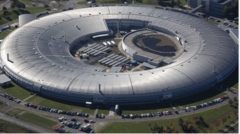
Prominent British research laboratories are facing a scale-back in operations following a strategic reassessment of government expenditure. This move impacts diverse fields ranging from cancer treatment development and battery engineering to fundamental physics and astronomy.
The UK Research and Innovation Agency (UKRI) announced that it must secure over £160 million in savings during the next four years to address rising operational costs. While national research and development funding is scheduled to reach a record £22.6 billion by 2030, UKRI chief Prof Sir Ian Chapman noted that current forecasts indicate the agency cannot sustain previously planned growth levels.
The agency intends to prioritize investments in artificial intelligence, quantum technologies, and supercomputing to stimulate economic growth. However, national laboratories are experiencing significant budget pressure, with funds for scientific activity projected to decrease by more than half, compounded by the necessity of repairing aging infrastructure.
Key sites affected include the Diamond Light Source, the ISIS Neutron and Muon Source, and the Central Laser Facility, all located in Oxfordshire. These centers expect reduced operational hours and potential project closures. Additionally, the Boulby Underground Laboratory, which studies dark matter, faces a 40% funding reduction. Sue Ferns of the Prospect Trade Union characterized these cuts as detrimental to regional business ecosystems and professional development.
Although lobbying efforts successfully mitigated initial, more drastic reductions planned for particle physics and astronomy, experts like Daniel Rathbone of the Campaign for Science and Engineering warn that these cuts could hinder long-term economic prosperity and scientific capability.