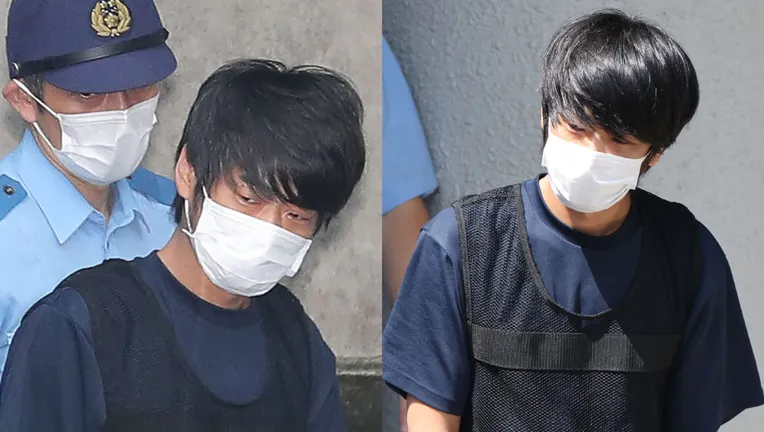
The man accused of assassinating former Japanese Prime Minister Shinzo Abe has pleaded guilty, three years after the killing that shocked the world.
Tetsuya Yamagami, who fatally shot Japan’s longest-serving leader in July 2022, appeared in court this week after several delays, including a 2023 postponement caused by a suspicious object found near the courthouse.
At a court in western Japan, Yamagami, dressed in a black T-shirt and escorted by four guards, calmly admitted his guilt. “Everything is true,” he told the judges, confirming responsibility for the murder.
His defense team, however, announced plans to challenge additional charges related to alleged violations of Japan’s arms control laws, which accuse him of building and using a homemade firearm. Yamagami’s trial has drawn significant public attention, largely due to debates over whether his traumatic upbringing and claimed “religious abuse” should be considered mitigating factors.
The case is closely tied to the Unification Church, a South Korea-based religious group founded in 1954 and often referred to as the “Moonies.” Yamagami reportedly blamed the Church for his family’s financial ruin after his mother donated nearly 100 million yen (about $1 million) to the organization.
Believing Shinzo Abe supported the Church, Yamagami allegedly targeted him for his perceived links to the sect. The Unification Church has denied allegations of exploiting members or causing family neglect.
The killing triggered nationwide outrage and intense scrutiny of the Church’s ties to Japan’s ruling Liberal Democratic Party (LDP). Investigations uncovered deep connections between the group and several conservative politicians, ultimately leading to the resignation of four government ministers.
In response to public anger, the Tokyo District Court earlier this year ordered the dissolution of the Church’s Japanese branch, ruling that it had caused “unprecedented damage” to society.
Abe’s assassination also highlighted vulnerabilities in Japan’s security system, despite its strict gun control laws. A police report later revealed that officers at the scene failed to recognize the initial gunshot and reacted too slowly to save the former prime minister.
The incident prompted lawmakers to tighten gun regulations further in 2024, introducing penalties for sharing online instructions on how to make firearms or for spreading illegal gun-related information on social media.