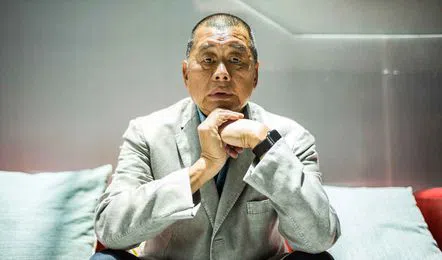
Jimmy Lai, the 78-year-old former Hong Kong media mogul, outspoken critic of Beijing, and founder of the now-defunct Apple Daily newspaper, was convicted in a landmark national security trial on Monday. The verdict could result in a life prison sentence for the pro-democracy figure.
A panel of three government-vetted judges found Lai guilty of conspiracy to collude with foreign forces to endanger national security and conspiracy to publish seditious articles, charges to which he had pleaded not guilty.
Lai was arrested in August 2020 under the Beijing-imposed National Security Law (NSL), implemented following the massive 2019 anti-government protests, and has been in custody for five years, during which his health has reportedly deteriorated.
In their extensive 855-page verdict, the judges concluded that Lai was the mastermind of the conspiracies and had extended a “constant invitation” to the U.S. to aid in the downfall of the Chinese government. Although Lai’s lawyers argued he stopped calling for sanctions after the NSL took effect, the court ruled he never wavered from his intent to destabilize the Chinese Communist Party, continuing his activities “though in a less explicit way.”
The court found that Lai’s ultimate aim, both before and after the NSL, was to seek the party’s downfall, even at the expense of the people of China and Hong Kong.
The non-jury trial was closely observed globally as a gauge of media freedom and judicial independence in Hong Kong. The collusion charge carries a maximum penalty of life imprisonment. Lai, who is also a British citizen, is due to begin mitigation hearings on January 12 before sentencing at a later date.
The verdict drew immediate international condemnation. U.K. Foreign Secretary Yvette Cooper condemned the “politically motivated prosecution” and called for his release, a sentiment echoed by groups like Reporters Without Borders and Amnesty International, which stated that the conviction was a “death knell for press freedom.”
Conversely, the Hong Kong government, through officials like Chief Executive John Lee and Security Secretary Chris Tang, strongly supported the verdict, maintaining that Lai’s intentions were malicious and that the ruling was about upholding national security, not suppressing the press.