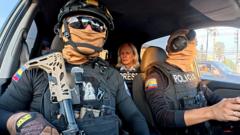
In the Ecuadorian city of Durán, Police Captain Jean Carlos Bustamante faces a brutal reality. He is not merely confronting violent gangs that threaten the community with murder and dismemberment; he is also fighting widespread corruption within his own ranks. Bustamante relies exclusively on a small, vetted team, as he believes many state actors and fellow officers are effectively on the payroll of local criminal organizations like Los Aguilas.
Operations in this region are high-risk. During raids on suspected hideouts, Bustamante’s team often recovers weapons and drugs, yet these represent only minor setbacks for syndicates that possess far greater resources than the state. Ecuador has become a primary transit point for cocaine destined for the U.S. and Europe, with approximately 70% of the drug flow originating from its borders. This has transformed the country from a peaceful destination into a battleground for gangs connected to international cartels.
President Daniel Noboa’s aggressive crackdowns have led to numerous arrests, but critics argue this has caused gangs to fracture and proliferate rather than disappear. Corruption remains a significant obstacle; police frequently capture criminals, only to see them released by the justice system. Some officers have even reported being targeted for bribes, with colleagues sometimes leaking information about police movements to gang leaders.
While local officials note a reduction in the murder rate in Durán during the first half of the year, the atmosphere of terror persists. In areas outside direct police control, gang leaders operate openly, arming teenagers and maintaining influence through violence. Members of these groups acknowledge the cycle of brutality, expecting their own lives to end in similar bloodshed. For residents, the constant threat of stray bullets and targeted hits remains a grim part of daily existence, leaving many skeptical that current government efforts can permanently dismantle the criminal hold on their neighborhoods.