



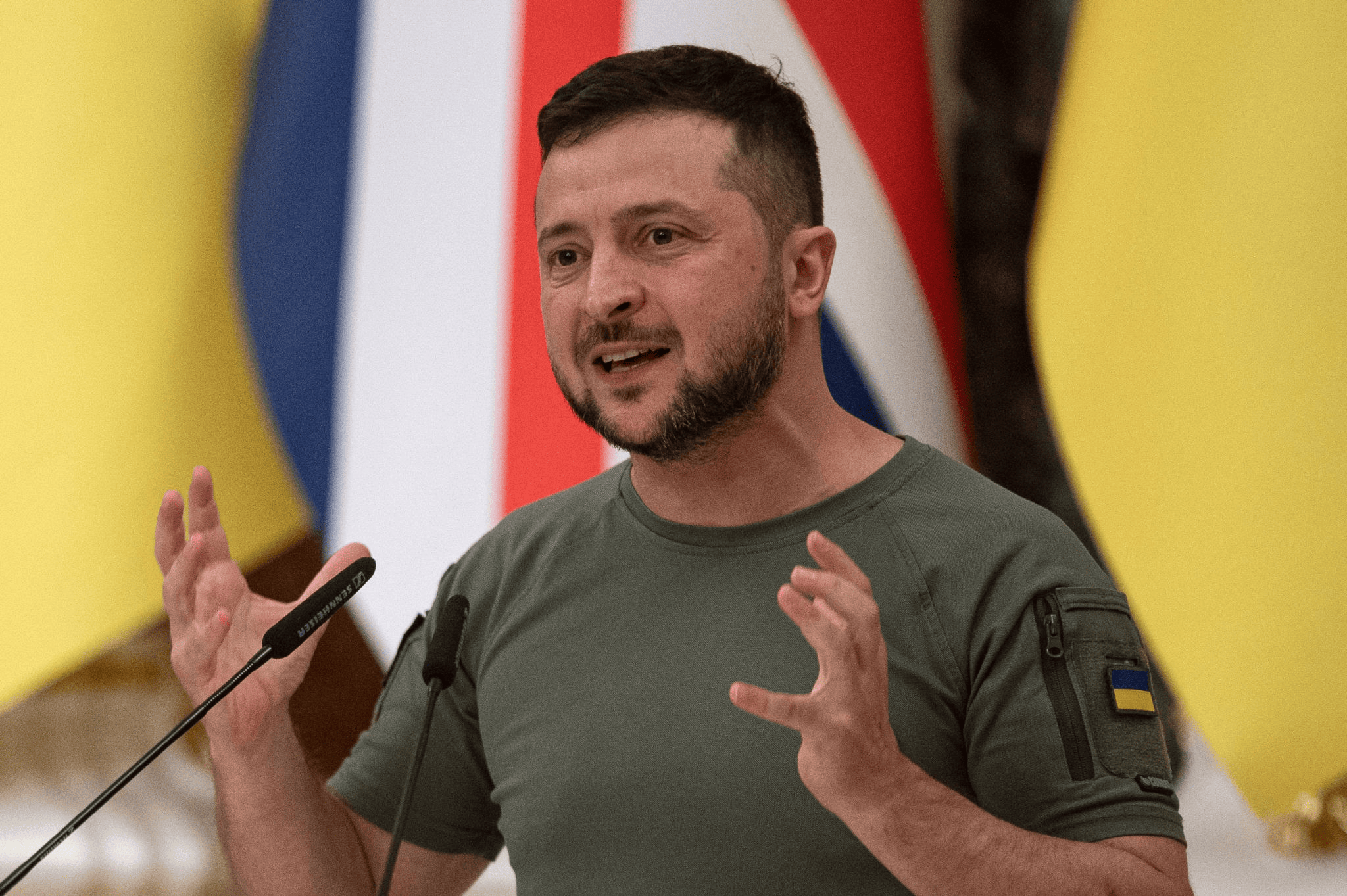
As Ukraine marks the third anniversary of Russia’s invasion, leaders from the European Union and Canada have gathered in a show of solidarity.
Russia launched its full-scale invasion on February 24, 2022, seizing more than 2% of Ukrainian territory. The war has resulted in the deaths of hundreds of thousands and displaced millions.
On Monday, Ukrainian President Volodymyr Zelenskyy praised the nation’s “heroism” as he welcomed European Commission President Ursula von der Leyen and Canadian Prime Minister Justin Trudeau, among other senior officials. However, no representative from the United States was present, highlighting growing uncertainty over Washington’s support.
“Three years of resistance. Three years of gratitude. Three years of absolute heroism of Ukrainians,” said Zelenskyy. “I thank everyone who defends and supports it.”
European Commission President Ursula von der Leyen reaffirmed the EU’s commitment to supporting Ukraine during the gathering.
“In this fight for survival, it is not only the destiny of Ukraine that is at stake. It’s Europe’s destiny,” she wrote in a social media post.
With the potential reduction or halt of U.S. military aid, leaders of the 27-member bloc are set to convene on March 6 for a special summit to make key decisions regarding Ukraine and European defense.
On Monday, EU foreign ministers reportedly approved a 16th package of sanctions against Russia, emphasizing that a swift ceasefire favoring Moscow would not be accepted.
However, Hungary, led by Viktor Orban, who has maintained close ties with Russian President Vladimir Putin and consistently complicated EU support for Ukraine, opposed further sanctions. Hungarian Foreign Minister Peter Szijjarto also stated that the country would not agree to an increase in EU military aid, aligning with U.S. President Donald Trump’s push for Ukraine to accept a peace deal with Russia.
Last week, U.S. officials met with their Russian counterparts, while Trump and Zelenskyy engaged in a public dispute, with Trump accusing Kyiv of initiating the war and questioning Zelenskyy’s legitimacy.
Trump’s proposed peace plan, which seeks to reinforce his reputation as a global dealmaker, has faced resistance from both sides.
Russia, meanwhile, declared on Monday that a rapid end to the war is “unacceptable,” warning that a ceasefire without a long-term resolution would only lead to renewed conflict with even greater consequences, including for U.S.-Russia relations, according to Deputy Foreign Minister Sergey Ryabkov via state-run RIA Novosti.
Meanwhile, Ukraine announced on Sunday that a controversial proposal allowing the U.S. to claim $500 billion in profits from Ukrainian rare minerals is no longer under consideration, with discussions on an alternative deal progressing.
Zelenskyy also stated at a forum in Kyiv that he would step down if it meant securing peace.
“If you need me to leave this chair, I am ready to do that, and I also can exchange it for NATO membership for Ukraine,” he said.