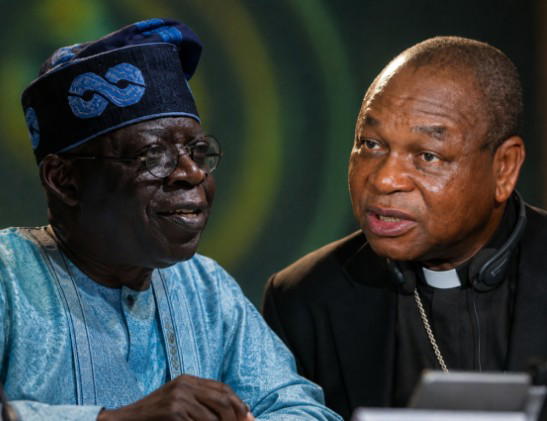
Prominent figures, including the Northern Christian Association (NCA), former Vice President Atiku Abubakar, and Senator Shehu Sani, have rallied behind the Catholic Bishops Conference of Nigeria (CBCN). This support follows sharp criticism from the Presidency directed at John Cardinal Onaiyekan, who recently raised concerns about economic hardship and the administration’s perceived intolerance toward opposing viewpoints.
The controversy emerged after Cardinal Onaiyekan spoke to Arise TV following a meeting between the bishops and President Bola Tinubu. The Cardinal expressed that the government was struggling to address the nation’s economic distress and was becoming increasingly hostile to criticism. Daniel Bwala, an aide to the President, countered these claims on social media, accusing the Cardinal of being politically motivated and failing to represent the broader Christian community.
Rev. Joseph Hayab, Chairman of the NCA, condemned Bwala’s comments as an attempt to incite divisions among Christians. He maintained that the bishops addressed national concerns on behalf of all Nigerians, not just the Catholic Church. Hayab stressed that the NCA, which represents various denominations including Baptists, Methodists, and Pentecostals, stands firmly with the Cardinal. He labeled the Presidency’s attacks as a disservice to the nation, urging officials to accept honest counsel rather than resorting to propaganda.
Atiku Abubakar, represented by his aide Phrank Shaibu, also criticized the government’s defensive stance. He argued that the administration appears accustomed to dealing with compliant, fake religious figures and therefore struggles to handle independent voices. He emphasized that the Catholic Church has a moral duty to speak for the vulnerable, warning that an insecure government that wars against honest feedback will only deepen its own isolation.
Senator Shehu Sani added that the Catholic Bishops have a long history of remaining non-partisan and speaking truth to power, noting that they consistently challenge leaders with harsh realities rather than offering empty praise. He noted that this tradition of confronting government officials with the truth has persisted since the military era.