



The Nigerian government has officially endorsed the creation of a West African petroleum pricing benchmark. Officials believe this move will enhance energy security, encourage cross-border trade, and allow the region to independently determine the value of its refined fuels. Heineken Lokpobiri, the Minister of State for Petroleum Resources, emphasized that this goal requires regional cooperation, noting that Nigeria’s own deregulation efforts are intended to invite greater investment and market-driven pricing.
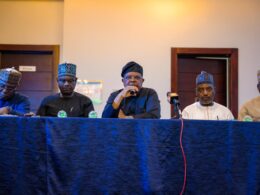
Speaking at the 2026 West Africa Refined Fuel Market Conference in Abuja, Rabiu Umar, head of the NMDPRA, highlighted that the focus has shifted from planning to implementation. He noted that while S&P Global is assisting with market reporting, a true trading hub requires physical infrastructure like pipelines, storage terminals, and efficient ports rather than just price assessments. He identified these infrastructure gaps as significant investment opportunities for stakeholders seeking bankable projects.
Olu Verheijen, Special Adviser to the President on Energy, argued that Nigeria’s increased refining capacity must be supported by better logistics and harmonized regional standards to achieve real energy security. Meanwhile, Oritsemeyiwa Eyesan of the NUPRC urged regional players to abandon isolated national market strategies in favor of a fully integrated system. Vera Blei of S&P Global noted that while her firm is expanding local currency price assessments in Abuja, the success of the benchmark ultimately depends on traders and refiners actively using it for their transactions.