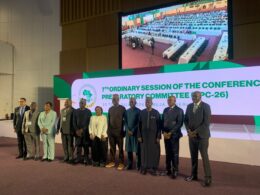




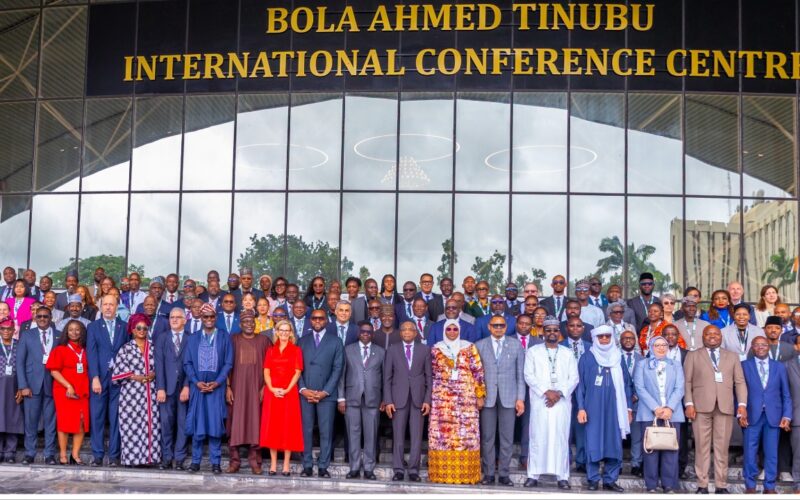
Nigeria has formally invited fellow African nations to synchronize their efforts in digital development, specifically calling for deeper cooperation in cybersecurity, artificial intelligence, telecommunications, and digital infrastructure. This call to action, delivered by Vice President Kashim Shettima during the African Telecommunications Union (ATU) Conference in Abuja, highlights the need for a cohesive continental strategy ahead of the 2026 International Telecommunication Union (ITU) Plenipotentiary Conference in Qatar.
Representing President Bola Ahmed Tinubu, Senator Ibrahim Hadeija argued that digital technology is now a primary driver of economic growth and national development, as critical as roads or electricity. He emphasized that no single country can solve the continent’s digital challenges alone, urging member states to unite to improve connectivity, harmonize standards, and advocate for responsible artificial intelligence governance.
Minister of Communications, Innovation and Digital Economy, Dr. Bosun Tijani, supported this vision by announcing the expansion of Nigeria’s Atlas project into the pan-African ATLAS network. This initiative aims to develop open-source large language models that represent the continent’s diverse cultures and languages. Currently, less than 2% of African languages are supported by mainstream AI, a gap this network intends to bridge by facilitating collaboration between governments, researchers, and tech partners.
Dr. Aminu Maida, CEO of the Nigerian Communications Commission, reinforced the importance of the conference, noting that while regulatory frameworks differ across borders, the core challenges faced by telecommunications regulators are remarkably similar. The event serves as a platform for African leaders to move beyond passive participation and instead become active, influential voices in global digital policy.