




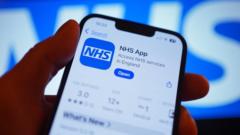
NHS England has unveiled plans to integrate artificial intelligence into its mobile application to better guide patients toward the most appropriate healthcare services. By utilizing a new triage function, the app will prompt users with questions to determine if they should seek help from a pharmacist, a GP, urgent care centers, or practice self-care.
Over the next year, this feature will reach an initial 200,000 patients, with full availability expected by April 2028. This update is part of a broader 10 billion pound government investment aimed at modernizing digital infrastructure. A pilot project at the Wealden Ridge Medical Partnership in Sussex successfully demonstrated the tool’s effectiveness, showing a 29 percent decrease in telephone appointment queues. Dr. Ragu Rajan noted that the system saves valuable time for medical staff without replacing their clinical judgment.
Additionally, the health service is expanding the use of AI to transcribe appointments and generate clinical notes in real time. Trials at several London trusts, including St George’s and Croydon, suggest this technology allows staff to dedicate significantly more time to direct patient care. While organizations like the Royal College of Nursing and the King’s Fund have acknowledged the potential for reduced administrative strain and improved access, they emphasized the necessity of maintaining strict patient privacy and preventing digital exclusion.