



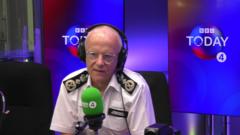
Sir Mark Rowley, head of the Metropolitan Police, has pushed back against criticism regarding the force’s handling of double murderer Simon Levy. While conceding that specific errors occurred during the investigation, Rowley insisted that claims the police failed to pursue a case after the first murder are inaccurate. During an appearance on BBC Radio 4’s Today programme, he emphasized that detectives conducted thorough work but lacked sufficient evidence for formal charges at the time.
Levy remained under police monitoring while on bail when he killed Carmenza Valencia-Trujillo in March 2025 and Sheryl Wilkins five months later. He also committed a violent rape against another woman during this period. The Independent Office for Police Conduct is currently reviewing how the force managed Levy between 2021 and 2025. Following his recent whole-life prison sentence, the Metropolitan Police and the Crown Prosecution Service have acknowledged significant lapses.
Rowley noted that the force was slow to investigate a separate sexual assault incident at HMP Brixton in 2022 and mistakenly downgraded Levy’s risk classification in 2024. However, the Commissioner also pointed to broader systemic issues, questioning why the prison service had released a known sex offender on licence. He argued that the entire justice system is under strain due to long-term disinvestment, noting that the Met is managing an increasing caseload of 10,800 registered sex offenders with fewer resources than in previous years.
The force’s handling of the case has drawn sharp rebukes from figures including Labour MP Jess Phillips and campaigner Mina Smallman, who suggested that the victim’s status as a sex worker may have influenced the police response. While acknowledging the need for systemic reform, Rowley maintains that public discourse on the matter requires a deeper understanding of the complex investigative challenges his officers faced.