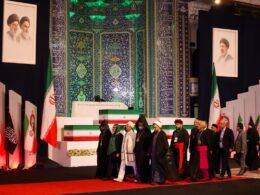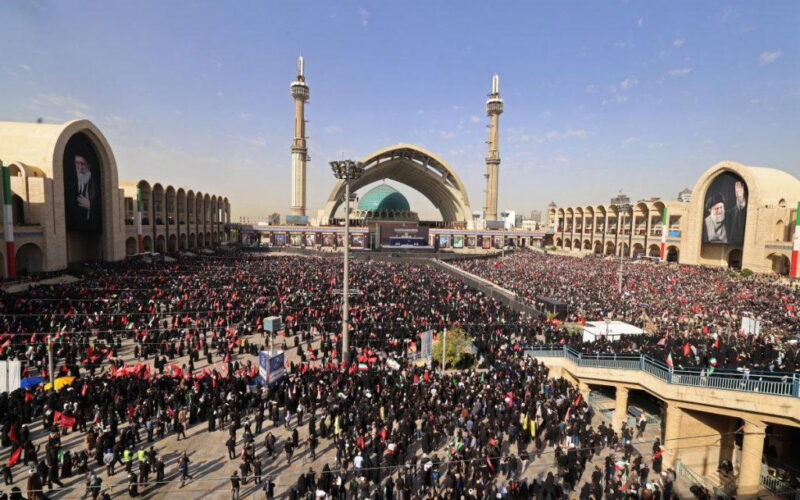
On July 4, 2026, funeral proceedings for the late Iranian Supreme Leader Ayatollah Ali Khamenei officially commenced at the Grand Mosalla in Tehran. State media indicated that thousands of mourners gathered to pay their final respects, with the event serving as a demonstration of resolve to the nation’s adversaries. Officials expect between 15 and 20 million people to participate in tributes across the capital over the next three days.
Khamenei, who led Iran from 1989 until his death at age 86 during the onset of the conflict with the US and Israel on February 28, will be commemorated over a six-day period. Observers are particularly focused on whether his son and successor, Mojtaba Khamenei, will make a public appearance following his appointment to the position.
Crowds at the Grand Mosalla carried red banners signifying vengeance, chanting slogans against the US and Israel. Attendees, including workers and academics, expressed deep loyalty to the former leader. Stringent security measures, including road closures and airspace restrictions, have been enacted for what is projected to be the largest public gathering since the 1989 burial of Ruhollah Khomeini.
The ceremonial timeline includes a procession in Tehran on Monday, a visit to the clerical center of Qom on Tuesday, and transit through holy cities in Iraq on Wednesday, culminating in burial in Mashhad on Thursday. International dignitaries, including Pakistan’s Prime Minister Shehbaz Sharif and Russian official Dmitry Medvedev, were in attendance to represent their respective nations alongside regional allies like Hamas and Hezbollah.
While fighting in the Middle East has paused following an initial agreement between Iran and the United States, military leaders and politicians have continued to emphasize a commitment to retaliation. Authorities have implemented safety precautions to manage the extreme heat and prevent potential crowd-related emergencies throughout the upcoming days of mourning.