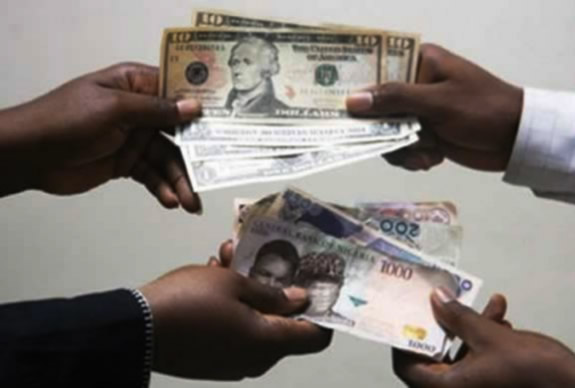
Investors typically shy away from uncertainty, especially when it complicates financial planning—a challenge Nigeria’s foreign exchange market faced amid severe dollar shortages caused by falling crude oil output and prices.
The resulting crisis left the Central Bank of Nigeria (CBN) unable to meet its forex obligations, creating a backlog of over $7 billion. Many manufacturers were unable to process letters of credit, forcing some to shut down due to a lack of raw materials. Additionally, foreign firms struggled to repatriate profits, prompting several to exit the Nigerian market.
However, the situation has notably improved since the CBN implemented forex market liberalisation reforms in June 2023. The introduction of a “willing buyer, willing seller” system has enhanced accessibility, with over $7 billion in backlog now cleared. Manufacturers now report fewer hurdles in obtaining foreign exchange.
The naira, which had weakened to N1,609/$ on May 9, appreciated to N1,590.75/$ by May 28 in the official market, reflecting renewed stability and investor optimism. The disparity between official and parallel market rates has narrowed, with the naira trading at N1,625/$ in the black market on the same day—down from previously wider margins. This progress has improved market transparency and curbed roundtripping.
Investor sentiment is also reflected in declining eurobond yields. Nigeria’s $1.5 billion eurobond due in 2034 saw yields fall to 9.69%—its lowest since issuance. Meanwhile, domestic debt auctions have shown strong demand, with Open Market Operation (OMO) bills attracting bids at 21.45%, down from 22.65% previously.
Analysts attribute the naira’s short-term resilience to strategic interventions, including a recent $190.4 million injection and easing global pressures.
In a note to investors, Dr. Ifeanyi Uba, Head of Research at Commercio Partners, noted that CBN Governor Yemi Cardoso defended the naira’s relative strength, asserting that the currency had outperformed many of its peers amid global uncertainty.
“There’s a silver lining,” Uba said. “The CBN’s foreign exchange reforms are delivering. One clear success has been the reduction in volatility. Although the naira has depreciated, it’s doing so in a more predictable and orderly manner.”
He added that the narrower spread between official and parallel rates underscores the progress made in stabilizing Nigeria’s forex landscape.
“Daily fluctuations in the exchange rate have also moderated significantly when compared to 2024, signalling growing market confidence and increased transparency in forex operations. This improved stability is not just a statistical detail, it matters deeply to investors. Exchange rate volatility is a major risk consideration for foreign investors looking to enter any emerging market.
“As Nigeria continues to rein in this volatility, it enhances its attractiveness as a destination for foreign capital. Should these reforms persist and deepen, they may lay the groundwork for a more sustainable and investment-friendly forex environment, potentially setting the stage for renewed inflows and a more stable naira in the long run,” he enunciated.
Emre Akcakmak, a portfolio manager at East Capital, expressed optimism about Nigeria’s economic prospects, highlighting that the country appears to be “back in business” as much-anticipated reforms take effect. He emphasized key improvements such as enhanced currency liquidity, greater freedom for investors to repatriate profits, and a more stable naira.
“We expect the Central Bank of Nigeria to continue managing the naira carefully, preventing sharp appreciations that could trigger profit-taking by short-term investors,” Akcakmak noted.
Meanwhile, Bloomberg reported that Samir Gadio, Head of Africa Strategy at Standard Chartered Plc, attributed growing portfolio inflows to rising investor confidence. He pointed to structural reforms, better foreign exchange market operations, and reduced dollar-naira volatility as the main drivers of this optimism. Gadio also mentioned that Nigeria’s strong nominal yield advantage has played a crucial role in sustaining