



The Federal Government has stated that it is not accountable for the increase in petrol pump prices.
On Wednesday, October 9, the Nigerian National Petroleum Company Limited (NNPCL) raised the fuel price from N897 per litre to N1,030 in Abuja, from N855 to N998 in Lagos, to N1,070 in the North-East, N1,025 in other South-West states, N1,045 in the South-East, and N1,075 in the South-South.
This prompted reactions from Nigerians, who are urging President Bola Tinubu to take action to reverse the increase.
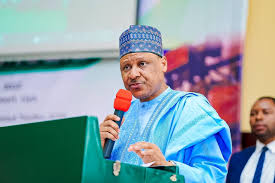
In a conversation with Daily Trust, the Minister of Information and National Orientation, Mohammed Idris, stated that the government should not be blamed for the recent increase in petrol prices.
Idris explained that the Nigerian National Petroleum Company Limited (NNPCL) made this decision based on current conditions in the energy sector, noting that it did not act on any directives from the federal government.
He emphasized that the government can no longer set prices for petroleum products, as per the provisions of the Petroleum Industry Act (PIA).
He mentioned that since the subsidy regime ended in May 2023, the NNPCL had been covering price differences to maintain costs within a certain range, but the company has now indicated it can no longer absorb these losses.
“The differential you’re seeing is a result of different factors. One of them is the crisis in the Middle East. There’s volatility in the market. Therefore, the prices of petroleum products are going up, consistent with what is happening with other operators in the industry globally. Secondly, NNPC cannot continue to absorb these losses for Nigeria because as a limited liability company, it would be operating at a loss,” he said
The minister urged Nigerians to remain patient with the NNPCL and the government, assuring them that prices will eventually decrease over time.
He stated that the government plans to invest the savings from subsidy removal into improving essential sectors such as healthcare, education, infrastructure, and security.
Additionally, he noted that the government’s initial investments in compressed natural gas (CNG) will help mitigate the impact, especially as more operators enter the market.