




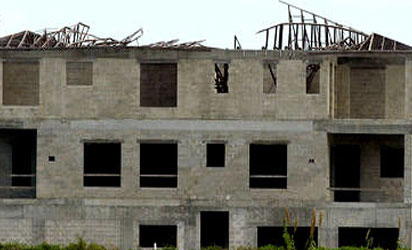
Finishing construction on long-abandoned buildings poses significant safety and economic challenges. Construction professionals caution that structures left exposed to the elements for years suffer from structural decay that must be addressed before they can be considered habitable.
Kunle Awobodu, a former leader of the Nigerian Institute of Building, explains that exposure to rainfall and carbon dioxide triggers a process called carbonation. This leads to corrosion of steel reinforcements, concrete cracks, and a shortened building lifespan. He emphasizes that a simple visual check is insufficient. Instead, a thorough building condition survey—including non-destructive testing and an analysis of structural integrity—is required to decide if a building needs major repairs or should be demolished entirely.
Dr. Augustine Otuoke, an official with the Building Collapse Prevention Guild, notes that unfinished structures are vulnerable to severe degradation because they lack the protective finishes like roofs and windows that shield occupied homes. He advocates for strict integrity testing and foundation checks, noting that a building’s functional life varies widely based on materials, ranging from 50 years for wooden structures to 500 years for stone, provided they are properly maintained.
Building engineer George Eromosele echoes these concerns, stating that unroofed structures face risks such as soil movement, foundation instability, and material rot. He warns that failing to conduct formal integrity tests on beams and columns could result in dangerous, code-violating properties. Furthermore, older utility installations in these abandoned sites often fail to meet modern safety standards and may harbor hidden damage from pests or mold.