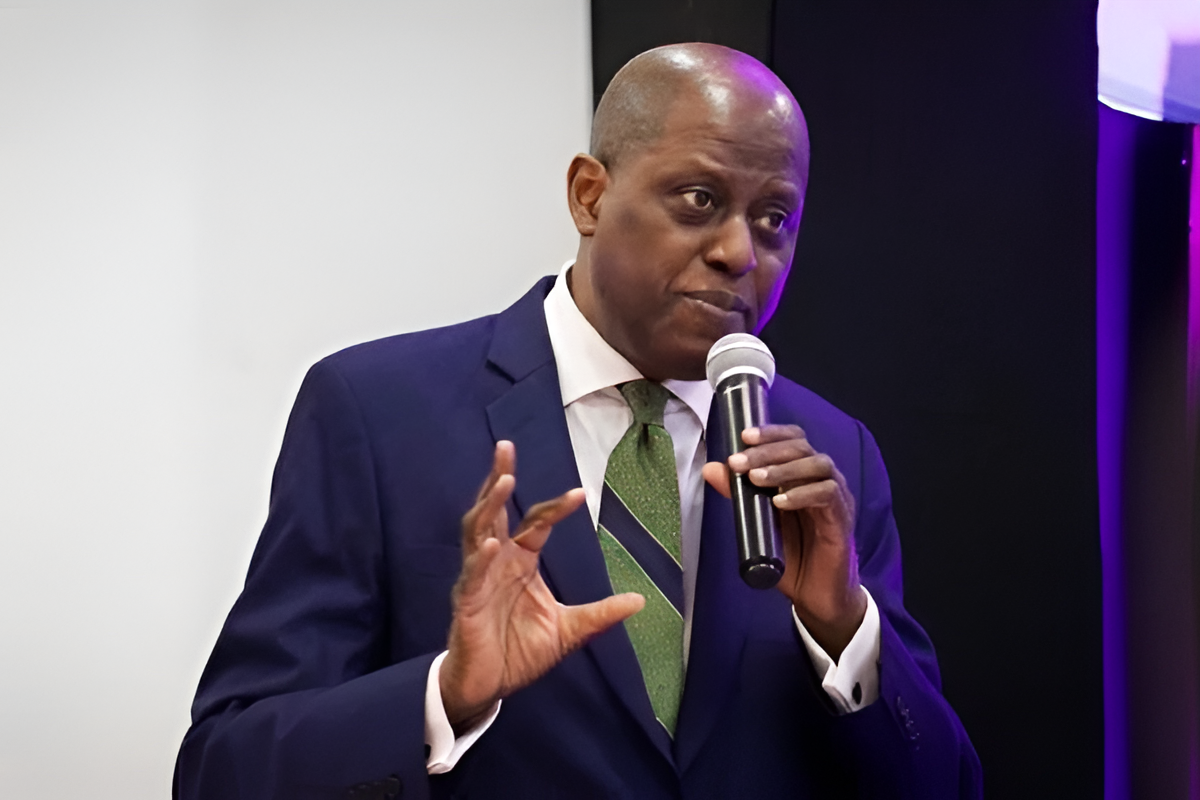
The Governor of the Central Bank of Nigeria (CBN), Olayemi Cardoso, has stated that the bank’s goal is to reduce inflation to single digits over the medium to long term.
Cardoso made these remarks in Abuja following the 299th Monetary Policy Committee (MPC) meeting, where he discussed the recent rebasing of the Consumer Price Index (CPI).
The adjustment reduced Nigeria’s inflation rate from 34.8 percent to 24.8 percent. He stressed that the revised figures more accurately represent the nation’s economic conditions and are in line with international standards.
“Despite the positive shift in inflation figures, the MPC opted to maintain the current MPR to ensure sustained economic stability,” he said.
“As always, we are data-driven. What we have is a CPI which is more reflective of the consumption pattern. To that extent, one commends the NBS for bringing this to reality.”
He reaffirmed the CBN’s dedication to closely tracking both domestic and international risks, emphasizing the importance of implementing proactive strategies to protect the nation’s economy.
“We will certainly stay that course. We will be vigilant. We will not take anything for granted,” he stated.
Cardoso acknowledged that inflation has persisted at elevated levels for too long and reiterated the CBN’s commitment to gradually reducing it to single digits.
“Our objective, in the medium to long term, is to ensure that we are able to bring this down from the double digits to the single digit,” he said. “As we continue with the policies that we have embarked upon, we believe that the road of travel will be in that direction.”
He emphasized that reaching this target would necessitate closer collaboration between monetary and fiscal authorities.
“I will be deceiving you to say the fiscal will do it on its own, the monetary will do it on its own. It won’t be,” he noted. “Coordination has always been important. But at no time can it be as important, in my view, as the situation we have now, because we can see change in a positive direction, and we need to not only maintain and hold but also improve it.”
Cardoso noted that the recent monetary policy forum, which brought together fiscal and monetary authorities, was a crucial step toward improved coordination and economic stability.
Regarding Nigeria’s external reserves, he disclosed that they stood at $39.4 billion as of February 14, providing an import cover of 9.6 months for goods and services. However, CBN data showed a decline to $38.7 billion by February 19, reflecting a decrease of $261.5 million.
Despite this drop, he emphasized that ongoing CBN reforms—such as the electronic foreign exchange matching system (EFEMS) and the new foreign exchange (FX) code—have strengthened investor confidence, stabilized the naira, and contributed to external reserve growth.