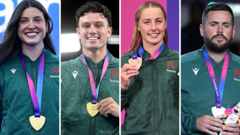
Northern Ireland’s athletes concluded their participation in the Glasgow Commonwealth Games with 16 medals, marking the second-highest tally in the region’s history despite a reduced sports program. While the lead-up to the event faced challenges due to host changes and schedule modifications, the ten days of competition provided significant value to local competitors.
For many Northern Irish athletes, the Games serve as a vital stepping stone in the middle of an Olympic cycle. Historically, these Games have acted as a training ground for future global success. Notable figures like Mary Peters, Wayne McCullough, Aidan Walsh, Rhys McClenaghan, and Daniel Wiffen all earned Commonwealth medals before achieving Olympic glory. Kate O’Connor, who secured gold in Glasgow, emphasized that the experience of competing on an international stage as a teenager was foundational to her current status as a world-class contender.
The event also offers a career pinnacle for sports not included in the Olympics, such as lawn bowls, where athletes like Gary Kelly and Adam McKeown achieved major success. For others, like boxer Jon McConnell and swimmer Ellie McCartney, the Games provided a platform to prove their capabilities against senior competition. Beyond the medals, the event fostered growth for younger members of the team, including record-setting performances by teenagers Emily Hughes, Matthew Hamilton, and Adam Bradley.
Conal Heatley, Northern Ireland’s Chef de Mission, maintained that the Games are essential for athlete development. By providing a high-pressure, multi-sport environment, the competition helps prepare individuals for future international challenges, including the Olympic Games in Los Angeles 2028.