England and Wales are currently experiencing their lowest rainfall levels for July since records began 190 years ago. Met Office data indicates that England received only 5.6mm of rain by July 30, which is just 8% of the typical monthly average and a significant drop below the previous 1911 record of 13.4mm. Wales recorded 7.9mm, also reaching only 8% of its expected average and falling well below its 1911 record of 22.6mm.
While the UK as a whole is seeing its third driest July on record, the Environment Agency has officially declared a flash drought across more than half of England. This status reflects a critical imbalance where water consumption is outpacing natural replenishment. Notably, Wisley in Surrey has gone 44 days without a single drop of rain. Meanwhile, Scotland is grappling with significant water scarcity, and various regions in Wales are also under drought designations.
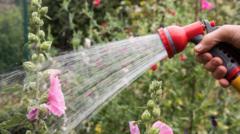
The consequences of these arid conditions are widespread. Beyond the implementation of hosepipe bans affecting over 20 million people, low river levels and early harvests have created serious agricultural strain. Dry vegetation has heightened wildfire risks, evidenced by a major incident in Suffolk and a large moorland fire in the Cairngorms. Health impacts have been equally severe, with the UK Health Security Agency estimating nearly 3,000 heat-related deaths during recent heatwaves. With temperatures frequently exceeding 35C and 30C, this summer is proving to be one of the most intense and hazardous in national history.