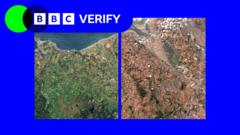
Recent satellite imagery highlights the significant impact of this summer’s extreme heat and lack of rainfall on the British landscape. BBC Verify analysis identifies specific regions suffering from vegetation stress, where plant and crop development has been stunted. Experts warn that the pairing of high temperatures and dry conditions poses a threat to agricultural productivity and food security.
Using the Normalised Difference Vegetation Index (NDVI), comparisons between May and July show a clear decline in plant health. Areas such as Conwy, Flintshire, Denbighshire, and Merseyside have shifted from vibrant green to brown, indicating widespread distress. Localized stress is also evident around Peterborough, Lincolnshire, and sections of Devon. Conversely, higher-altitude regions in Scotland and Wales have largely maintained normal conditions.
Dr. Jess Neumann from the University of Reading noted that while summer browning occurs, the current scale of dry parks and lawns is unusual, as native plants are not acclimated to such intense, prolonged heat. Furthermore, the rapid onset of this drought—following a wet start to 2026—has exacerbated the situation.
Agriculture is facing dual challenges: potential drops in crop yields and reduced livestock feed, forcing farmers to tap into winter reserves. Meanwhile, researchers express concern over wildlife struggling to adapt to these extreme conditions. Although reservoir levels are generally better than in previous drought years, they remain below historical averages, raising critical questions about the UK’s long-term water management strategies in the face of human-induced climate change.