



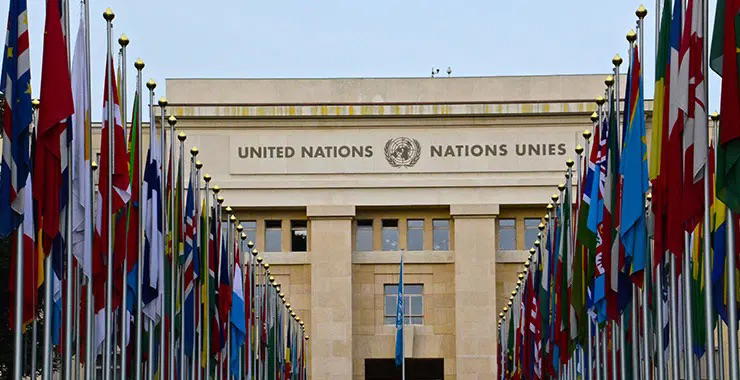
The United Nations Security Council has officially launched the search for the organization’s next leader by conducting an initial straw poll to evaluate support for the seven individuals currently competing for the role. These hopefuls aim to succeed Antonio Guterres, whose second five-year mandate concludes on December 31, 2026.
The field includes four women and three men: Michelle Bachelet from Chile, Maria Fernanda Espinosa of Ecuador, Rafael Grossi of Argentina, Rebeca Grynspan of Costa Rica, Olara Otunnu of Uganda, Carolyn Rodrigues-Birkett of Guyana, and Macky Sall of Senegal. While Rafael Grossi, currently leading the International Atomic Energy Agency, possesses significant name recognition, analysts suggest there is no definitive frontrunner at this early stage.
Success in this competition requires securing nine votes from the 15-member Security Council while avoiding a veto from any of the five permanent members: the United States, Russia, China, France, and the United Kingdom. Given the divisions among these powers, diplomats remain cautious about predicting an outcome. If a candidate succeeds within the Council, their nomination moves to the General Assembly for final confirmation.
The ongoing straw poll process, a practice dating back to the 1980s, allows council members to anonymously rate candidates as encouraged, discouraged, or neutral. While the current round uses uniform ballots, later stages will distinguish the votes of permanent members to help highlight potential vetoes. Experts note that this informal approach helps identify non-viable candidates early, allowing them to withdraw gracefully.
Regional rotation traditions suggest the position may favor a Latin American candidate this time. Additionally, many member states are actively campaigning for the first female leader in UN history. Before this initial voting phase, most candidates participated in public and private hearings to present their platforms to the assembly and the Council.