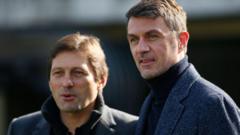
The Italian national football team recently finalized the appointment of Roberto Mancini as head coach, concluding a tumultuous period that resulted in the resignations of technical director Paolo Maldini and advisor Leonardo. Both officials exited their roles just 16 days after being hired. FIGC president Giovanni Malago attributed the departures to a fundamental disagreement regarding the vision for the national team, noting that while the separation was professional, their perspectives on Mancini’s candidacy did not align.
Before settling on Mancini, the leadership team had aggressively pursued other candidates, including Pep Guardiola and Carlo Ancelotti, both of whom declined the offers. A subsequent push for Andrea Pirlo faced significant opposition from the FIGC hierarchy, partly due to public outcry over his associations with a Russian betting entity. This failure to secure their preferred manager proved to be a breaking point for Maldini and Leonardo. Consequently, the organization has turned to the veteran Claudio Ranieri to fill the role of technical director.
Italy faces a profound challenge in attempting a systemic reset following a two-decade span of inconsistent results. A recent FIGC report highlighted deep-seated structural problems, including a lack of investment in youth development and an aging player base in Serie A. With limited opportunities for young talent to gain experience, the national team struggles to remain competitive. Whether these new leadership appointments can address these complex issues or if the team will remain trapped in a cycle of disappointment remains to be seen.