



The Rural Electrification Agency (REA) has announced a strategy to develop 3.7 gigawatts of domestic solar panel manufacturing capacity by 2027. This move is designed to boost energy access across Nigeria and lower the country’s reliance on imported renewable hardware.
Engr. Abba Aliyu, the agency’s Managing Director, shared these goals in Abuja during a session with the Zanzibar Utilities Regulatory Authority. He explained that REA is inviting Chinese manufacturers to set up plants in Nigeria. Current data shows that solar equipment assembled in Lagos is already being sold to markets in Ghana.
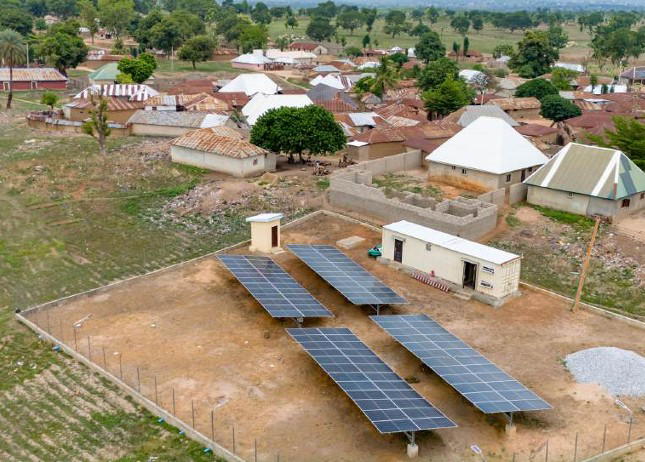
Expanding local production aims to bolster the nation’s supply chain and curb import reliance. Aliyu noted that declining costs for lithium batteries and solar components are making off-grid energy the primary solution for millions who lack power. Currently, Nigeria reports an electricity access rate of 61.2 percent, leaving approximately 80 million residents without stable power.
To solve this, the REA uses a least-cost electrification model to identify the best technology for individual communities. The agency has cataloged 700,000 sites, projecting that 45 percent will use home solar systems, 31 percent will utilize mini-grids, and 24 percent will rely on grid expansion. Furthermore, the agency has built an extensive geospatial database mapping over 51,000 health centers, 11,000 markets, and numerous schools to guide future infrastructure investments. Aliyu cautioned that power demand will continue to climb as population growth and the rise of data-intensive technologies increase the load on the national system.